
PNT Lab equipment
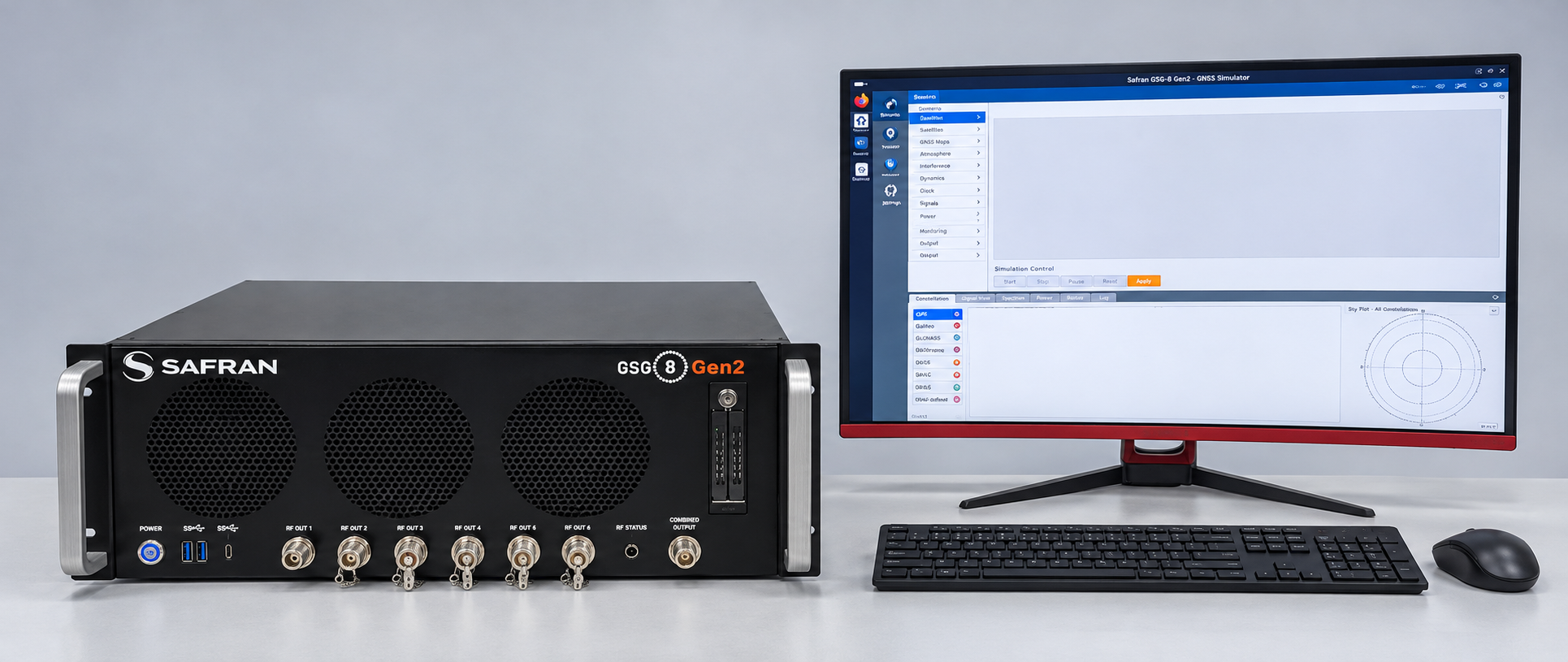
GSG-8 Gen2 GNSS Signal Simulator
Purpose :
The GSG-8 Gen 2 is a compact, high-performance GNSS signal simulator designed for testing, validation, and development of GNSS receivers and navigation systems.
Features:
- All MF/MC Signals via Individual or Composite Port
- Up to 6 vehicle or antennas in a simulation
- Simulate jamming, spoofing, meaconing,interference of all kind
- Unlimited number of jammers
- 1000 Hz simulation iteration rate
- Available in three configurations with up to 6 SDRs
Specifications:
- Power Consumption: 1600 W
- GNSS Bands: L1, L2, L5, E6, S-band
- Multi-Constellation Support: GPS, Galileo, GLONASS, BeiDou, QZSS, NavIC, SBAS, Xona
- Advanced Signals: Civil, encrypted/restricted, and custom signals
- Timing Module: CDM-7
- Processing Power: High-end GPUs
- Custom Configuration: Custom signals and constellation support
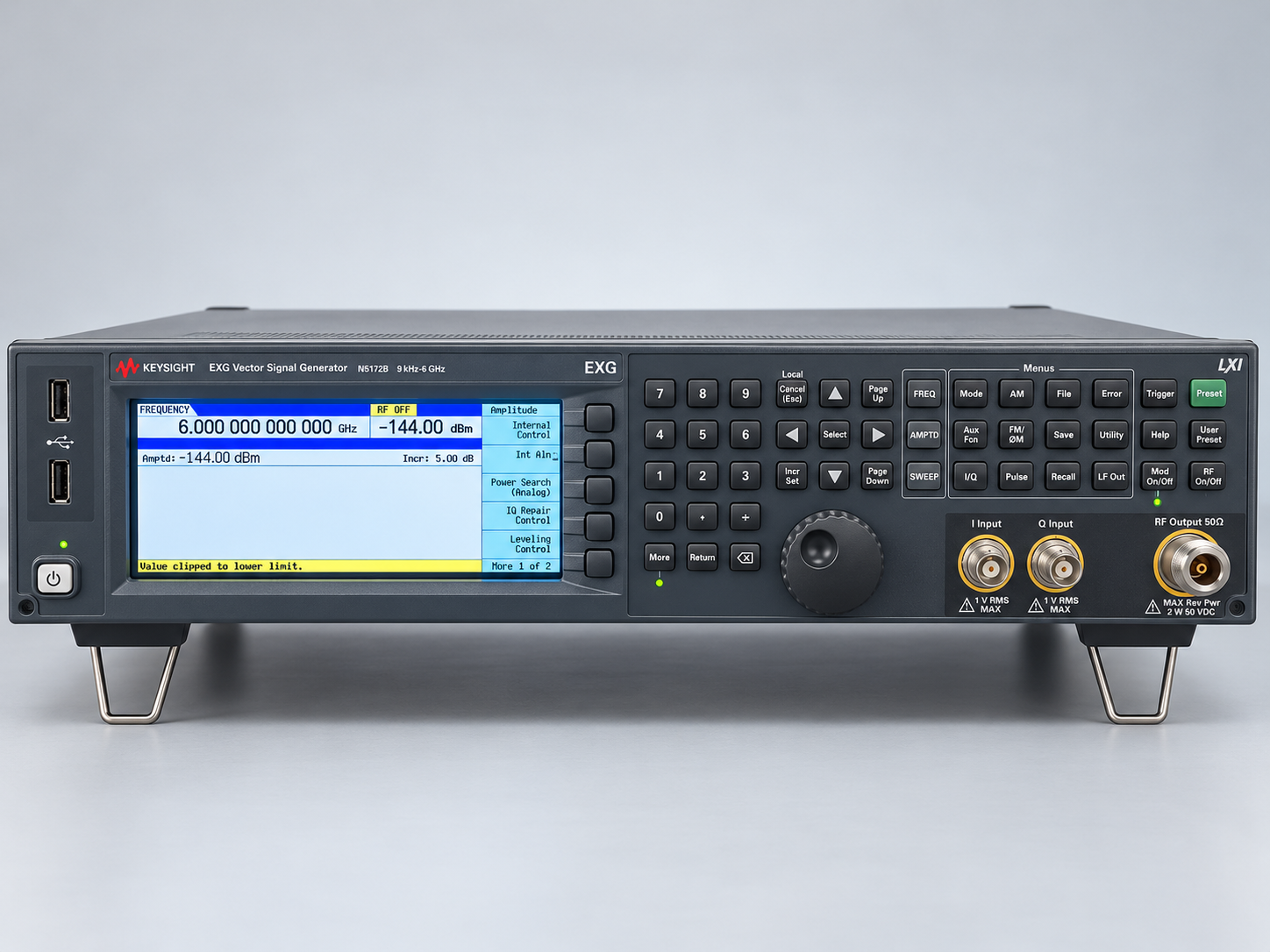
EXG Vector Signal Generator
Purpose :
RF vector signal generator optimized for manufacturing test, providing signals for component parametric testing and receiver functional verification.
Features:
- Suitable for 5G, LTE, WLAN, Bluetooth, GNSS, aerospace, and defense applications.
- Fast switching speeds: <= 5ms in SCPI mode
- Option UNZ improves speed to <=1.15ms
- Option UNZ improves speed to <=1.5ms with digital modulation on
- Scalable performance – output power, ACPR, EVM,
- bandwidth, can be upgraded via license key without added hardware
- Sub-800 μs switching speed for frequency, power, and waveform type changes
- Pre-defined, standards-based waveforms (LTE, W-CDMA, WLAN, etc.) for accurate, repeatable testing
- High-stability internal OCXO reference option available
Specifications:
- Frequency Range: 9 kHz–6 GHz
- Output Power: Up to +27 dBm
- Output Level Range: −144 to +27 dBm
- Output Impedance: 50 Ω
- Frequency Resolution: 0.01 Hz
- Phase Noise: ≤ −122 dBc/Hz (typical)
- Harmonics: ≤ −35 dBc (typical)
- Spurious Emissions: ≤ −60 dBc (typical)
- Amplitude Accuracy: ±0.7 dB (typical)
- General-Purpose Modulation: AM, FM, PM, ASK, FSK, MSK, PSK, I/Q, Multitone, AWGN, NPR
- Software Support: MATLAB and analog I/Q input
- Broadcasting Standards: ATSC, CMMB, DAB/DAB+, DMB, DOCSIS, DTMB, DVB, FM Stereo/RDS, ISDB-T, J.83, T-DMB
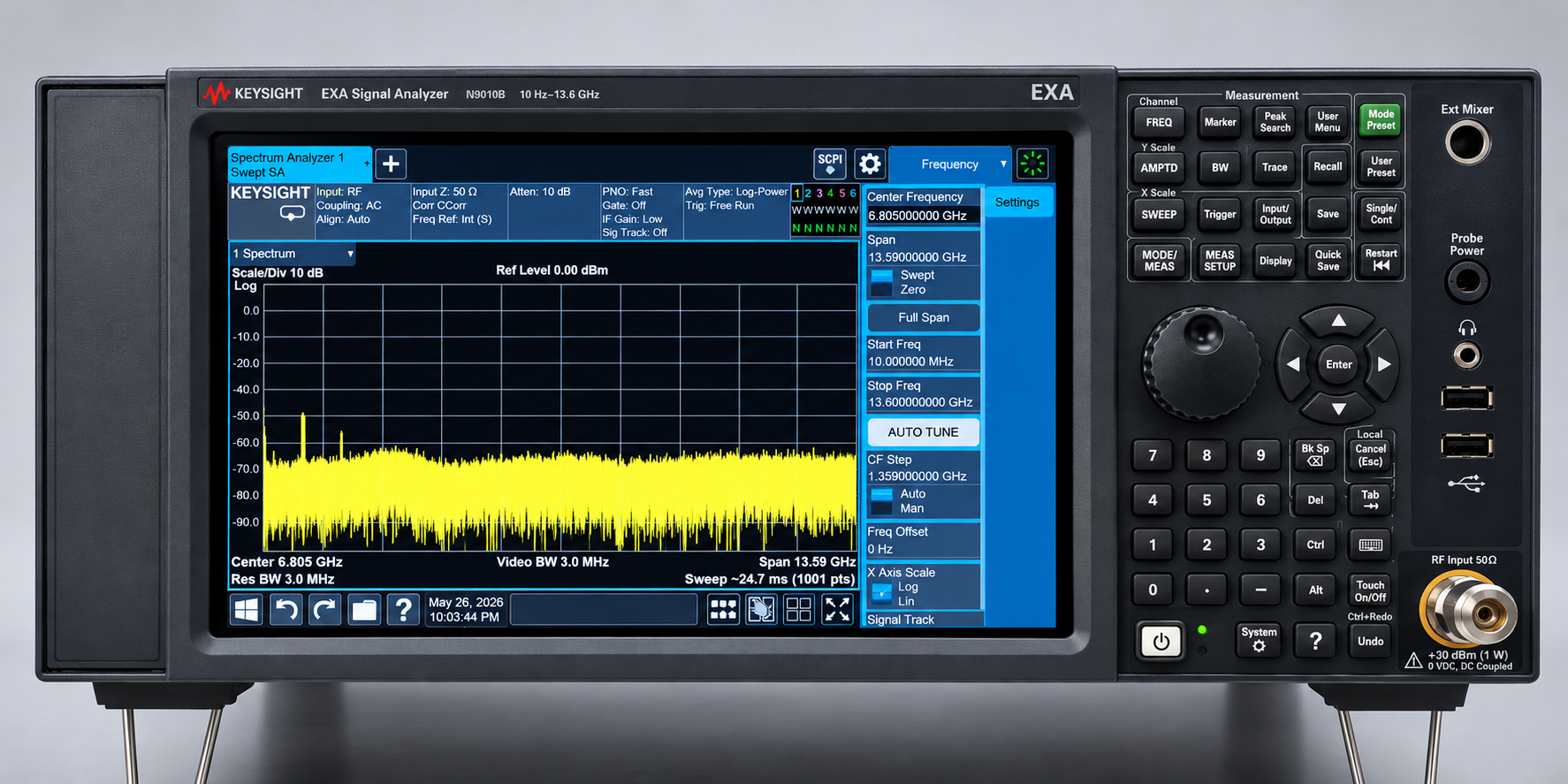
EXA Signal Analyzer
Purpose :
N9010B EXA X-Series signal analyzer provides RF and microwave signal analysis for wireless communication, radar, GNSS and aerospace applications.
Features:
- Frequency Range: 10 Hz–13.6 GHz
- Analysis Modes: Spectrum Analyzer and I/Q Analyzer
- Fast Sweeps: Reduced spurious measurement time
- Processor: Quad-core, 16 GB RAM
- Display: 10.6-inch multi-touch screen
- Software Compatibility: PathWave X-Series measurement applications
- Applications: Cellular, wireless connectivity, and audio/video broadcast testing
Specifications:
- Frequency Range: 10 Hz–13.6 GHz
- Frequency Resolution: 0.01 Hz
- Input Impedance: 50 Ω
- Analysis Bandwidth: Up to 40 MHz
- RBW/VBW: 1 Hz–8 MHz
- DANL: ≤ −163 dBm/Hz
- Phase Noise: ≤ −109 dBc/Hz at 1 GHz (10 kHz offset)
- Amplitude Accuracy: ±0.5 dB
- Third-Order Intercept (TOI): +17 dBm
- Cellular Standards: GSM/EDGE, LTE/LTE-Advanced, W-CDMA/HSPA/HSPA+, NB-IoT
- Analysis Applications: 89600 VSA, MATLAB, analog demodulation, noise figure, pulse, EMI, phase noise, and vector modulation analysis
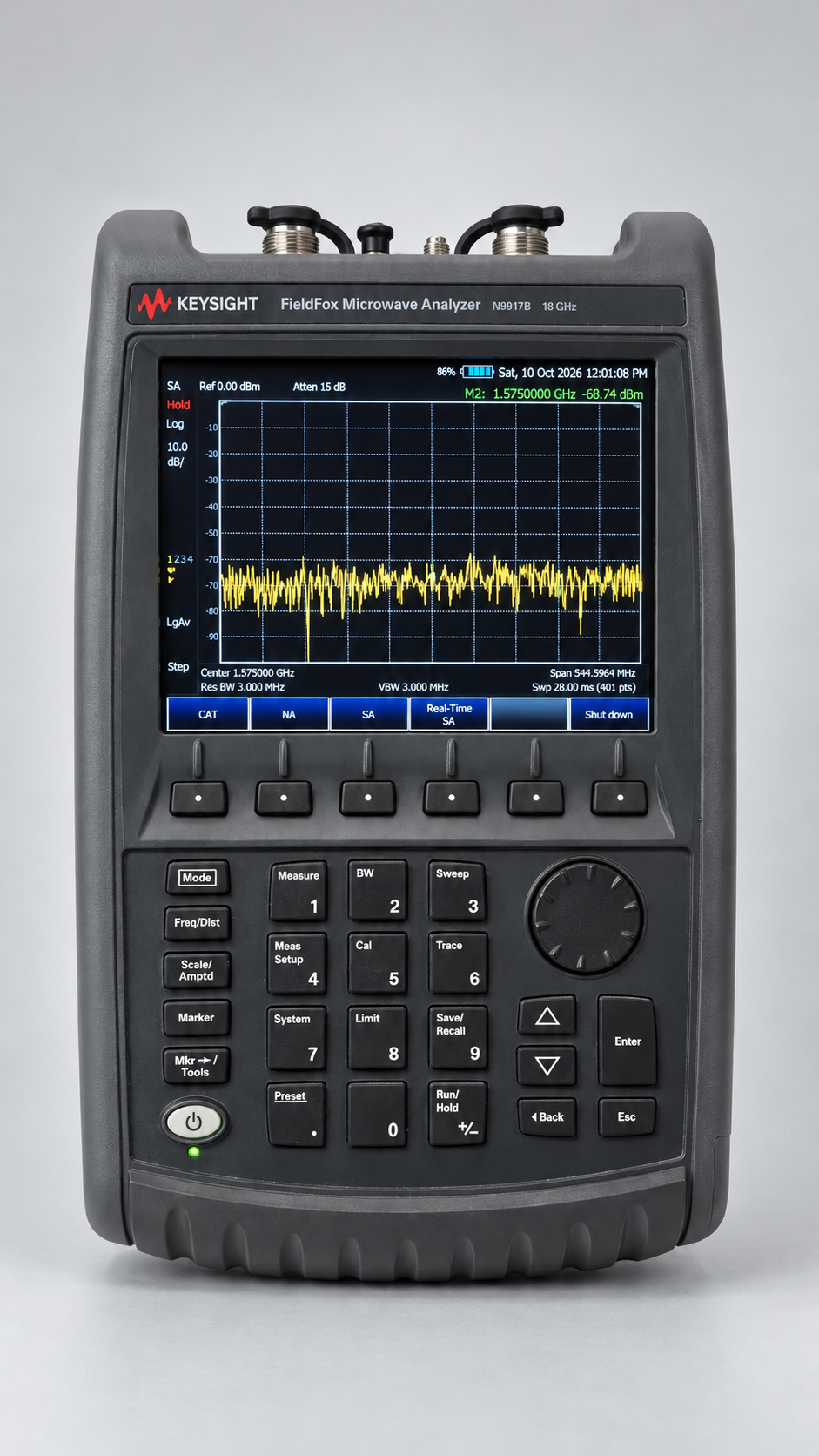
FieldFox Microwave Analyzer
Purpose :
The FieldFox Microwave Analyzer provides portable RF and microwave analysis for field testing, maintenance, and troubleshooting of communication and radar systems.
Features:
- Frequency Range: 30 kHz–18 GHz
- Portable Design: Handheld microwave analyzer
- 3-in-1 Functionality: Cable & Antenna Analyzer, VNA, and Spectrum Analyzer
- Amplitude Accuracy: ±0.3 dB
- Cable Testing: Distance-to-Fault (DTF), VSWR, Return Loss, and Cable Loss
- Measurement Capability: Reflection and Over-the-Air (OTA) testing
- Applications: GNSS, satellite communications, radar, RF/microwave, aerospace, and defence
Specifications:
- Frequency Range: 30 kHz–18 GHz
- Analysis Bandwidth: Up to 100 MHz (Option B10)
- IQ Streaming Bandwidth: 1 MHz
- Dynamic Range: Up to 115 dB
- IF Bandwidth: 3 Hz–100 kHz
- Sweep Speed: 171 μs/point (VNA mode)
- Measurement Modes: CAT, VNA, Spectrum Analyzer, DTF, VSWR, Cable Loss
- Amplitude Accuracy: ±0.3 dB
- Test Port Output Power: +9 dBm (High), −50 dBm (Low)
- Maximum Leveled Output Power: +6 dBm
- Power Level Accuracy: ±0.5 dB
- Maximum RF Input Power: +27 dBm (0.5 W)
- DC Input Protection: ±50 V DC
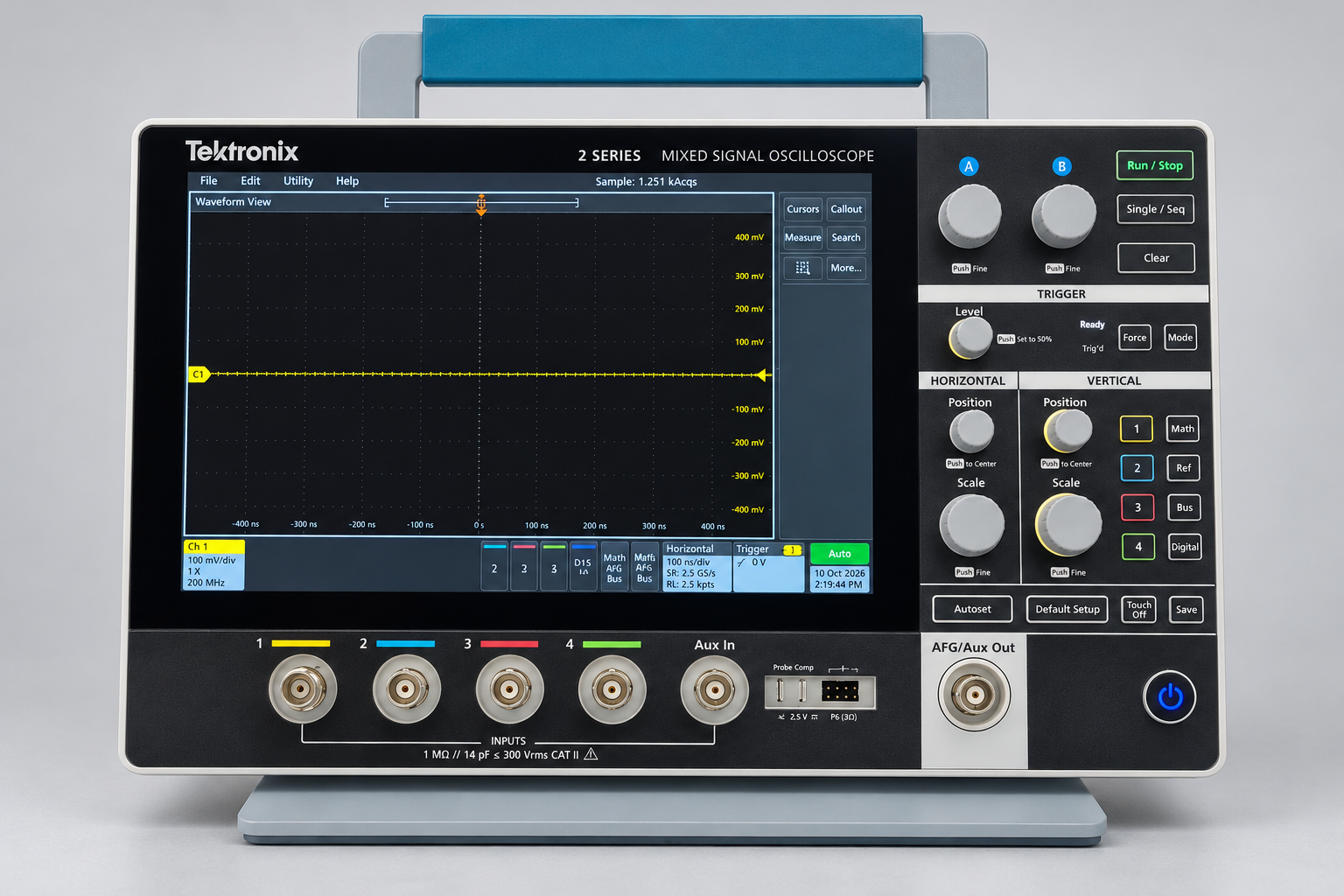
Mixed Signal Oscilloscope
Purpose:
The Tektronix Mixed Signal Oscilloscope provides high-performance waveform acquisition, analysis, and debugging for digital, and embedded electronic systems.
Features:
- Analog Channels: 4 channels
- Digital Channels: 16 optional channels via P6316 probe
- Serial Protocol Support: I²C, SPI, UART, RS-232/422/485, CAN, CAN FD, CAN XL, LIN, 10BASE-T1S, SENT
- Function Generator: Built-in 50 MHz Arbitrary Function Generator (AFG)
- Waveform Support: Sine, square, pulse, ramp/triangle, noise, DC, and other predefined waveforms
- Digital Pattern Generator: 4-bit output with 4k points per bit
- Capability: Mixed-signal analysis, protocol triggering, and decoding
Specifications:
- Analog Channels: 4
- Digital Channels: 16
- Bandwidth: Up to 200 MHz
- Maximum Sample Rate: 2.5 GS/s
- Record Length: 10 Mpoints/channel
- Vertical Resolution: 8-bit (up to 16-bit high-resolution mode)
- Display: 10.1-inch WXGA capacitive touchscreen
- Automatic Measurements: 37+
- Math Functions: FFT, addition, subtraction, multiplication, division
- Trigger Types: Edge, pulse width, runt, timeout, logic, setup and hold
- Connectivity: 2 × USB 2.0 Host, 1 × USB 2.0 Device, 10/100 Mb/s Ethernet
- Input Voltage: 100–240 V AC, 50/60 Hz
- Power Consumption: Approximately 90 W
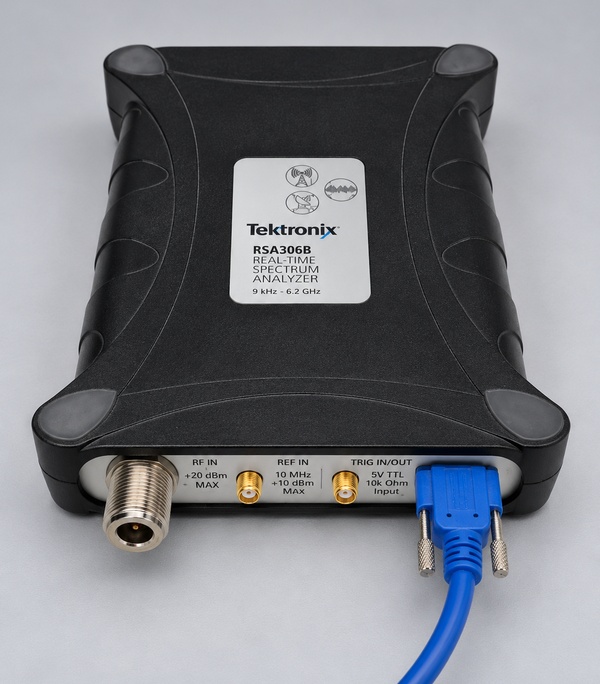
Real-Time Spectrum Analyzer
Purpose:
The Tektronix RSA306B Real-Time Spectrum Analyzer provides real-time RF spectrum analysis and signal debugging for wireless communications, and spectrum monitoring.
Features:
- PC-Based Analysis: Hardware acquisition with PC/software-based measurement and display
- Software: Tektronix SignalVu-PC RF Signal Analysis
- Real-Time Analysis: DPX spectrum and spectrogram technology
- Advanced Triggers: Frequency Mask Trigger (FMT), Time-Qualified Trigger, and DPX Density Trigger
- Sweep Speed: 2 sweeps per second across 6.2 GHz
- Signal Capture: Detects signals as short as 15–27 μs
- Detection Reliability: 100% Probability of Intercept (POI) for specified signal durations
Specifications:
Frequency Range: 9 kHz to 6.2 GHz
- Real-Time Bandwidth: 40 MHz
- Measurement Range: −160 dBm to +20 dBm
- Minimum POI: 15 µs
- SFDR: 60 dBc (Typical)
- Frequency Reference Accuracy: ±3 ppm (Initial)
- External Reference Input: 10 MHz ±10 Hz
- Frequency Resolution: 1 Hz
- Input Impedance: 50 Ω
- Maximum RF Input: +23 dBm
- Maximum Operating Input: +20 dBm
- RF Input Connector: Type-N Female
- PC Interface: USB 3.0 (Required)
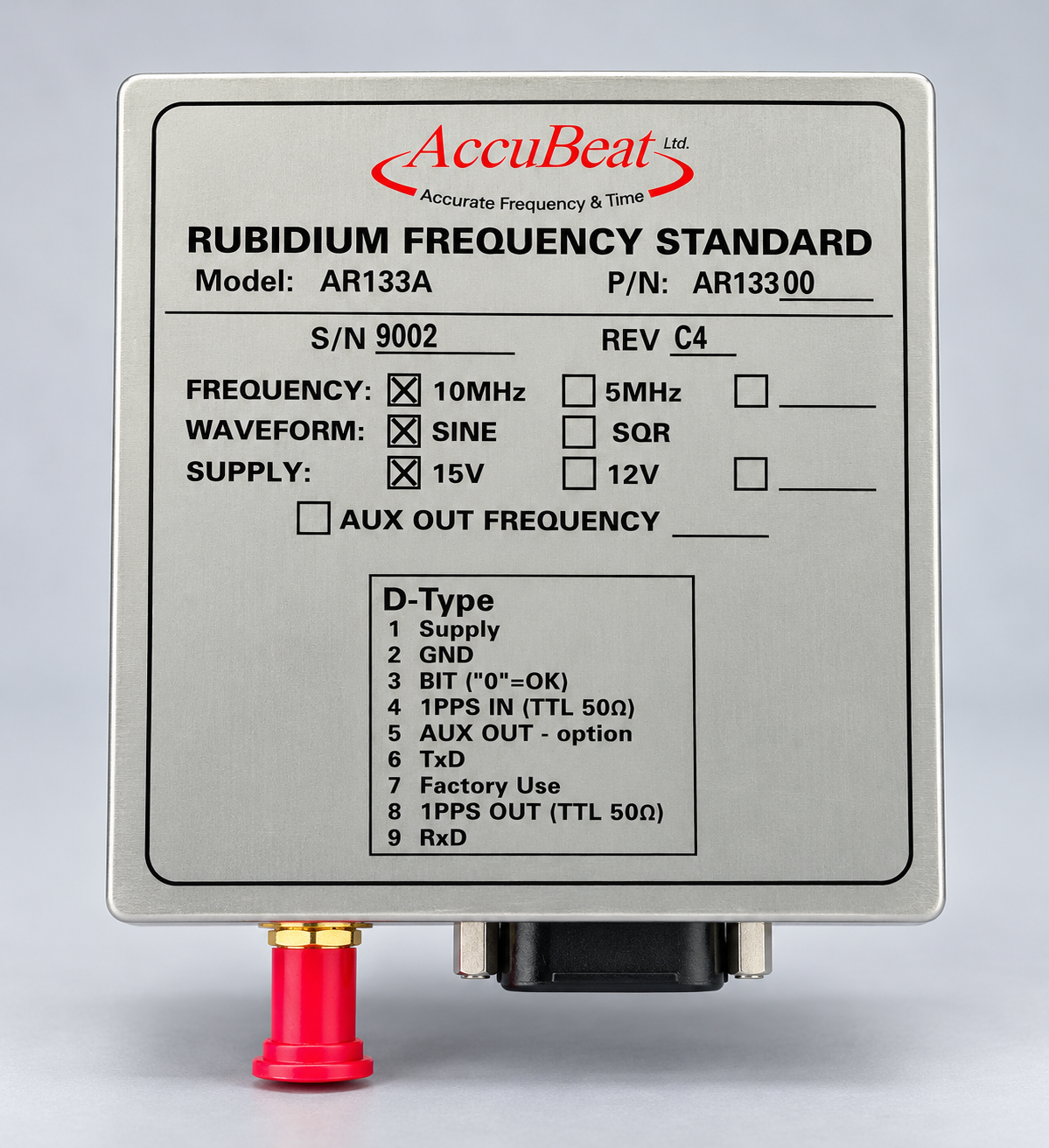
RubidiumAtomic Clock
Purpose: The AccuBeat AR133A Rubidium Atomic Clock provides a high-stability frequency and time reference with precision 10 MHz and 1 PPS outputs for timing-critical RF, GNSS, and communication systems.
Features:
- Frequency Accuracy: 210-12
- 1 PPS Accuracy: 100 ns
- Relative to 1 PPS input when disciplined
- Short-Term Stability: 510-12 at 100 s
- Phase Noise: −150 dBc/Hz at 10 kHz
- Outputs: 10 MHz and 1 PPS
- Supply Voltage: 15 VDC / 12 VDC
- Steady-State Power Consumption: Less than 8.25 W
- Power-Saving Mode: Less than 1.8 W
- Dimensions: 77 × 77 × 25.4 mm
- Long-Term Stability: 510-11/month
Specifications:
- Frequency Performance: Output Frequency: 10 MHz; 1 PPS Output: Yes; Frequency Accuracy: 210-12 (disciplined); Long-Term Stability: 510-11/month; Short-Term Stability: 510-12 at 100 s.
- Signal Quality: Phase Noise: −150 dBc/Hz at 10 kHz; 1 PPS Accuracy: 100 ns relative to 1 PPS input when disciplined.
- Output Performance: Primary Output: 10 MHz sine wave, +12 ±2 dBm into 50 Ω; 1 PPS Output: 3 V TTL into 50 Ω; 1 PPS Rise Time: Less than 30 ns; 1 PPS Pulse Width: Less than 20 µs; 1 PPS Input: TTL, 50 Ω.
- Timing Accuracy: 1 PPS Long-Term Accuracy: 1 µs / 24 hours; 1 PPS RMS Accuracy: 100 ns (50 ns typical).
- Electrical & Physical: Supply Voltage: 15 ±0.3 VDC (12 VDC optional); Power Consumption: Less than 8.25 W; Power-Saving Mode: Less than 1.8 W; Warm-Up Time: Less than 4 minutes at 25°C; Operating Temperature: −20°C to +65°C; Storage Temperature: −40°C to +80°C; Weight: Less than 295 g.
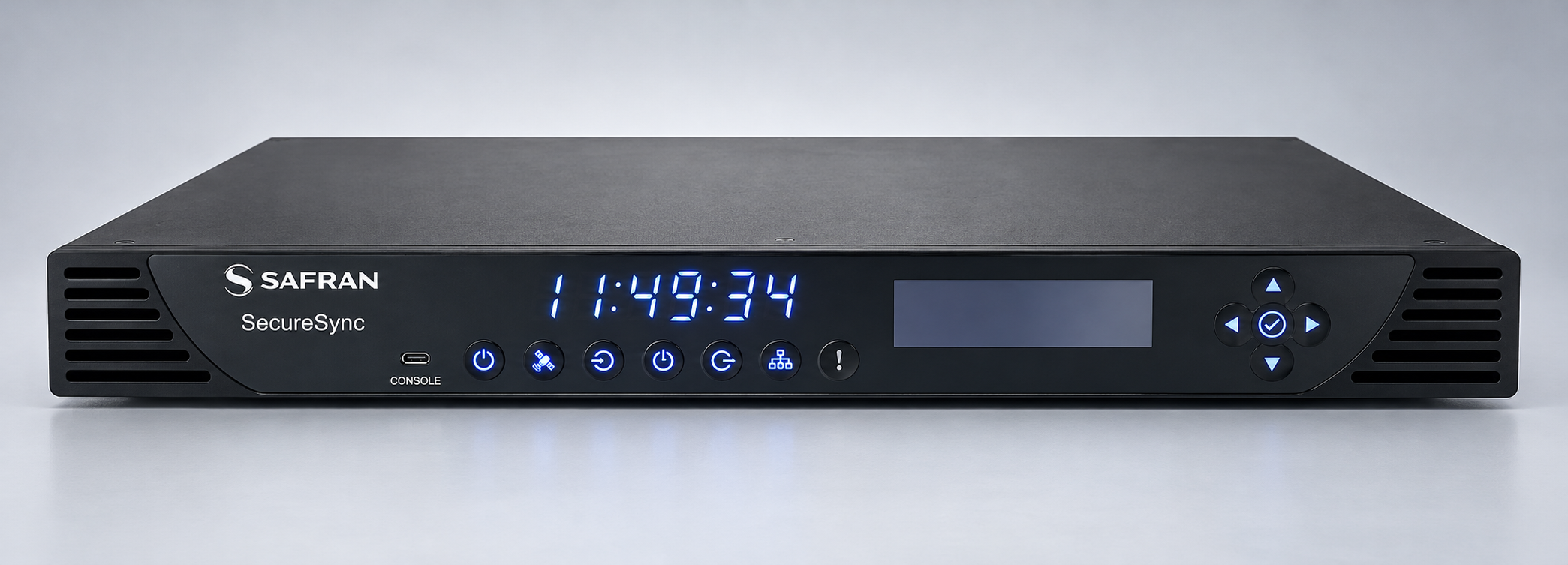
Secure SyncHighPrecisionNTP Server
Purpose: A highly secure, modular time and frequency reference system that synchronizes critical defense and commercial network infrastructure using NTP and PTP protocols.
Features:
- Multi-band, multi-constellation GNSS support (GPS, Galileo, GLONASS, BeiDou, QZSS, and NavIC).
- High-precision 10 MHz frequency and 1 PPS timing outputs.
- Supports NTP, PTP, IRIG-B, NMEA, and Have Quick timing interfaces.
- Software-configurable I/O with TTL, RS-232, and RS-485 support.
- Available in 2-slot (2402) and 6-slot (2406) modular configurations.
- Supports 40+ expansion option cards for frequency, phase, and network timing.
- Field-upgradeable modular architecture for future expansion.
- Designed for telecommunications, defense, aerospace, power utilities, and data centers.
Specifications:
- Timing Performance: NTP Accuracy: Less than 1 ms over LAN; PTP Accuracy: Less than 100 ns (hardware timestamping); 1 PPS Accuracy: Less than 30 ns; Holdover Stability: OCXO/Rubidium oscillator options.
- Network Interfaces: ETH1: 10/100/1000 Base-T (SFP); NTP/SNTP and management; Protocols: NTP, PTP, SNMP, SSH, HTTPS; Management: Web GUI, CLI, SNMP.
- Output Performance: Network Time Protocol (NTP): IPv4/IPv6; Precision Time Protocol (PTP): IEEE 1588v2; 10 MHz Output: Available; 1 PPS Output: Available; Time-of-Day Output: IRIG-B, Serial.
- Security: Access Control: ACLs, IPtables, SSH Key Authentication; Secure Protocols: HTTPS (SHA-256), TLS 1.1/1.2; Optional Security: M-Code, SAASM, NTP Symmetric Keys.
- Physical & Electrical: Power Supply: 100–240 VAC (optional −48 VDC); Operating Temperature: 0°C to +50°C; Form Factor: 1U rack mount.
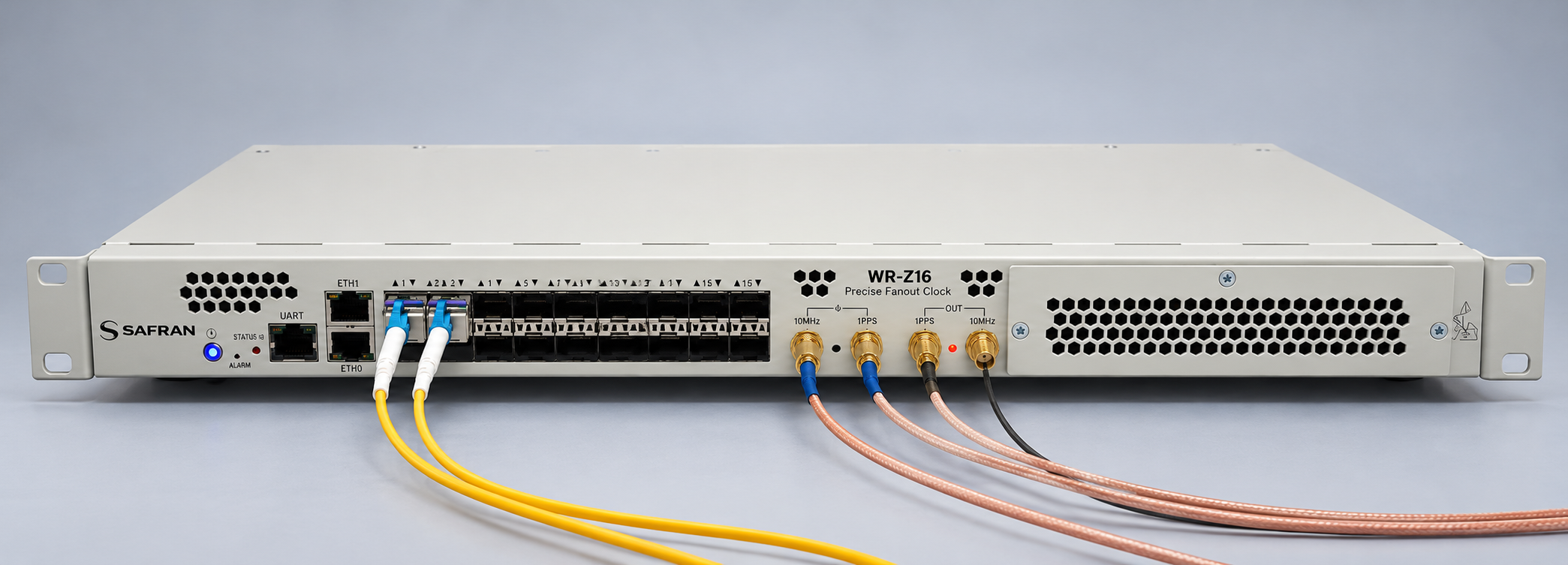
Secure SyncHighPrecisionWhiteRabbit
Purpose: A reliable, high-precision time fan-out solution that distributes White Rabbit sub-nanosecond synchronization across 1G Ethernet-based networks through 16 optical fiber ports.
Features:
- Sub-nanosecond time accuracy (less than 1 ns) using the White Rabbit protocol, a high-accuracy PTP extension based on SyncE.
- 16 SFP optical timing ports supporting White Rabbit, PTPv2, and NTP simultaneously.
- Multi-source timing with seamless failover between White Rabbit, external GNSS/atomic clocks, PTP, and NTP, with precise source monitoring.
- Interoperable with standard PTP IEEE 1588 profiles, including Default, G.8265.1, G.8275.1, IEEE C37.238-2011, IEEE/IEC 61850-9-3, Enterprise, and IEEE 1588-2019 High Accuracy.
- Supports NTP v2, v3, and v4.
- Optional holdover oscillator maintains high accuracy even if all timing references are lost.
Specifications:
- Timing Performance: White Rabbit Accuracy: Less than 1 ns (sub-nanosecond); PTP Accuracy: Less than 100 ns (hardware timestamping); 1 PPS Accuracy: Less than 30 ns; Holdover Stability: Optional holdover oscillator available.
- Network Interfaces: Management Port: Ethernet (RJ45); Timing Ports: 16 × SFP optical fiber ports; Protocols: White Rabbit, PTPv2, NTP, SNMP, SSH, HTTPS.
- White Rabbit Ports: Number of SFP Ports: 16 optical fiber ports; Port Type: SFP 1G optical; Protocol Support: White Rabbit, PTPv2, NTP simultaneously on all ports.
- Protocol Support: White Rabbit Protocol: Yes, sub-nanosecond synchronization; SyncE (Synchronous Ethernet): Yes, base for White Rabbit; IEEE 1588 PTP: Yes, PTPv2 hardware timestamping; NTP: v2, v3, and v4 supported.
- Security: Access Control: ACLs, IPtables, SSH Key Authentication; Secure Protocols: HTTPS SHA-256, TLS 1.1/1.2; Optional Security: M-Code, SAASM, NTP Symmetric Keys.
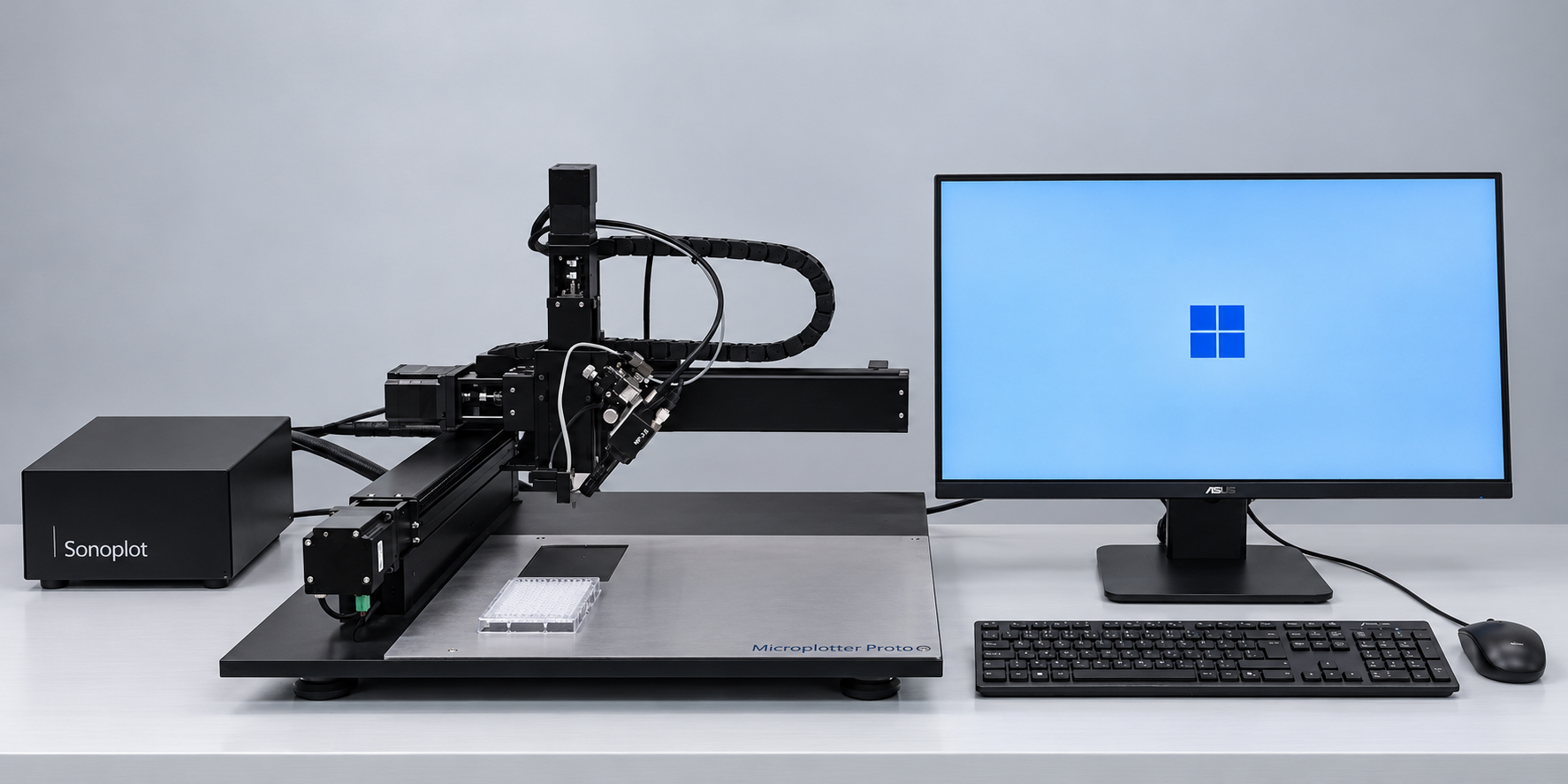
Microplotter Proto
Purpose: The SonoPlot Microplotter Proto is a fluid dispensing system designed for printing conductive inks on substrates such as FR-4, Rogers, and glass for printed electronics and antenna applications.
Features:
- Non-contact ultrasonic dispensing technology that pumps fluid to the tip of a glass micropipette, forming a meniscus that can be touched off as a droplet or moved to draw continuous features.
- Draws true continuous lines and arcs, suitable for conductive ink and printed electronics traces.
- Compact desktop footprint, providing a lower-cost entry point to SonoPlot’s Microplotter technology.
- Automatic surface-height calibration for consistent, repeatable dispensing, with variability as low as 10%.
- Handles high-viscosity and saturated fluids up to 450 cP without clogging, beyond standard inkjet capabilities.
- Applications include rapid prototyping, printed electronics, MEMS printing, and protein/biological microarrays.
Specifications:
- Printing Performance: Dispensing Technology: Ultrasonic Picoliter Fluid Dispensing; Droplet Volume: Picoliter range; Minimum Feature Size: Approximately 20 µm (ink and substrate dependent); Printing Method: Non-contact material deposition.
- Material Compatibility: Supported Inks: Conductive, dielectric, polymer, biological, and nanoparticle inks; Supported Substrates: FR-4, Rogers, glass, silicon, ceramic, and flexible films.
- Motion System: Positioning: Computer-controlled XYZ precision stage; Pattern Control: CAD/user-programmable deposition paths.
- General: Application Areas: Printed electronics, RF/microwave circuits, antennas, sensors, and microarrays; Operation: Benchtop precision material dispensing system; Deposition Type: Single-point and continuous pattern printing.
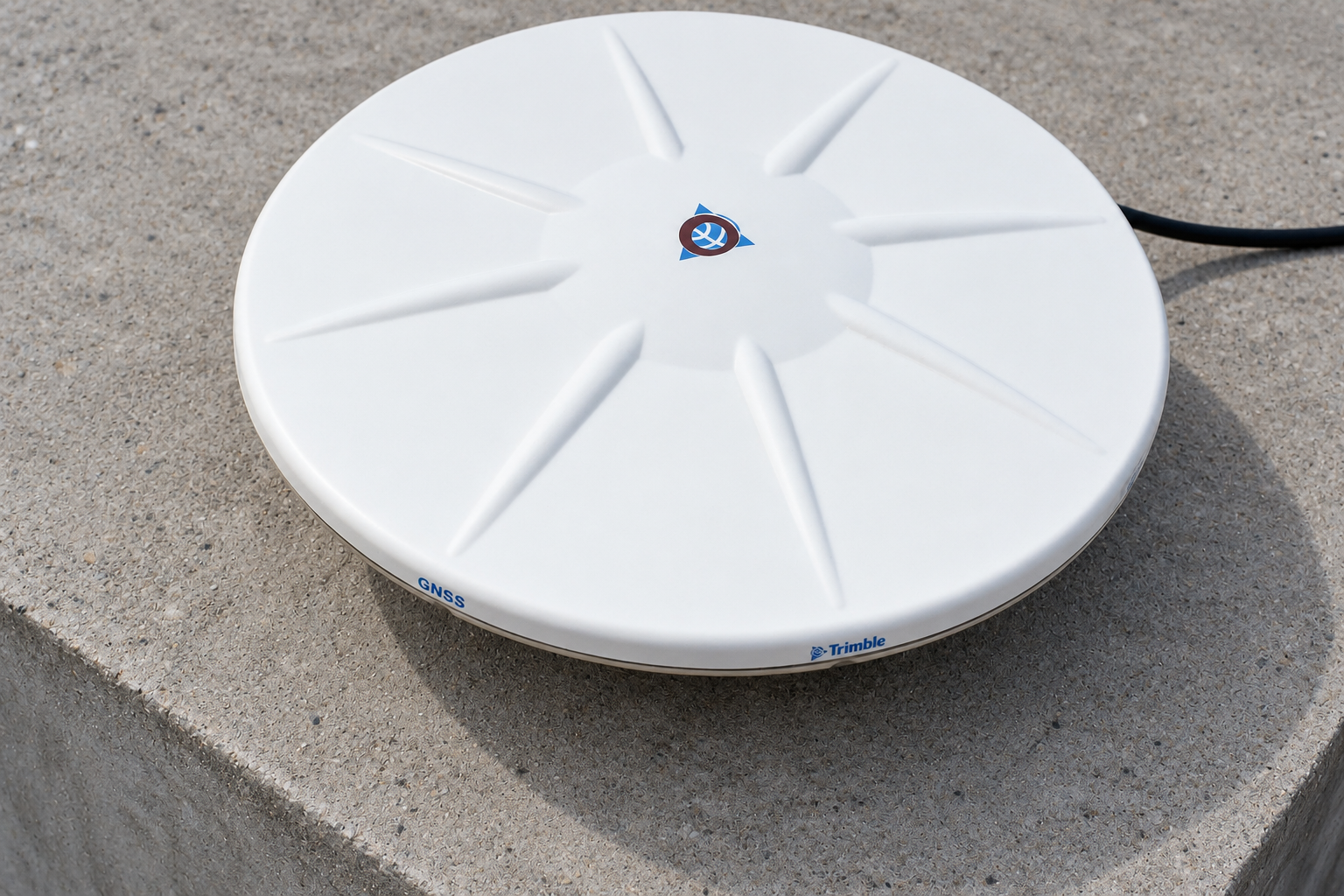
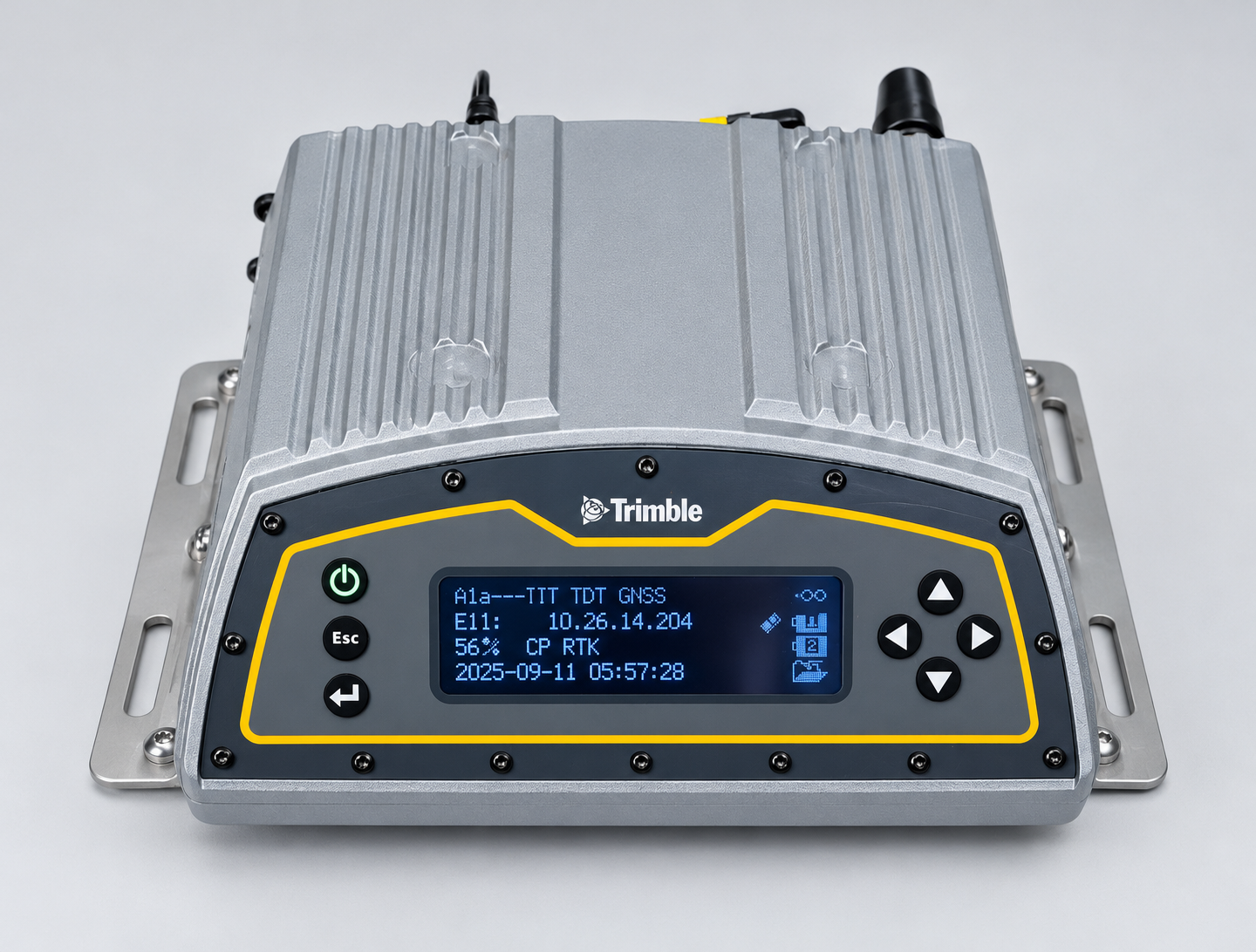
GNSSReferenceReceiver
Purpose: The Trimble Alloy GNSS Reference Receiver provides high-precision, continuous GNSS positioning and timing for Continuously Operating Reference Station (CORS) networks and scientific applications.
Features:
- Tracks GPS, GLONASS, Galileo, BeiDou, QZSS, NavIC (IRNSS), and SBAS.
- Supports CORS, RTK, PPP, and Network RTK applications.
- Integrated multi-frequency, multi-constellation GNSS receiver.
- Built-in web interface for configuration and remote monitoring.
- Supports NTRIP Server/Client and RTCM data streaming.
- High-precision 1 PPS timing output.
- Ethernet connectivity with secure remote access.
- Rugged, weather-resistant design for continuous 24/7 operation.
- Supports RINEX logging and real-time correction services.
Specifications:
- GNSS Tracking: Supported Constellations: GPS, GLONASS, Galileo, BeiDou, QZSS, NavIC (IRNSS), and SBAS; Signal Tracking: Multi-frequency, multi-constellation; Channels: Up to 672 GNSS channels.
- Timing Performance: 1 PPS Output Accuracy: Less than 20 ns (typical); Frequency Reference: GNSS disciplined; Timing Applications: Network synchronization and time transfer.
- Positioning Performance: RTK Accuracy: 8 mm + 1 ppm (horizontal), 15 mm + 1 ppm (vertical); Static Accuracy: 3 mm + 0.1 ppm (horizontal), 3.5 mm + 0.4 ppm (vertical); PPP Support: Yes; CORS Support: Yes.
- Data Formats: Observation Formats: RTCM 2.x / 3.x; Logging Formats: RINEX; Correction Services: RTK, Network RTK, and PPP.
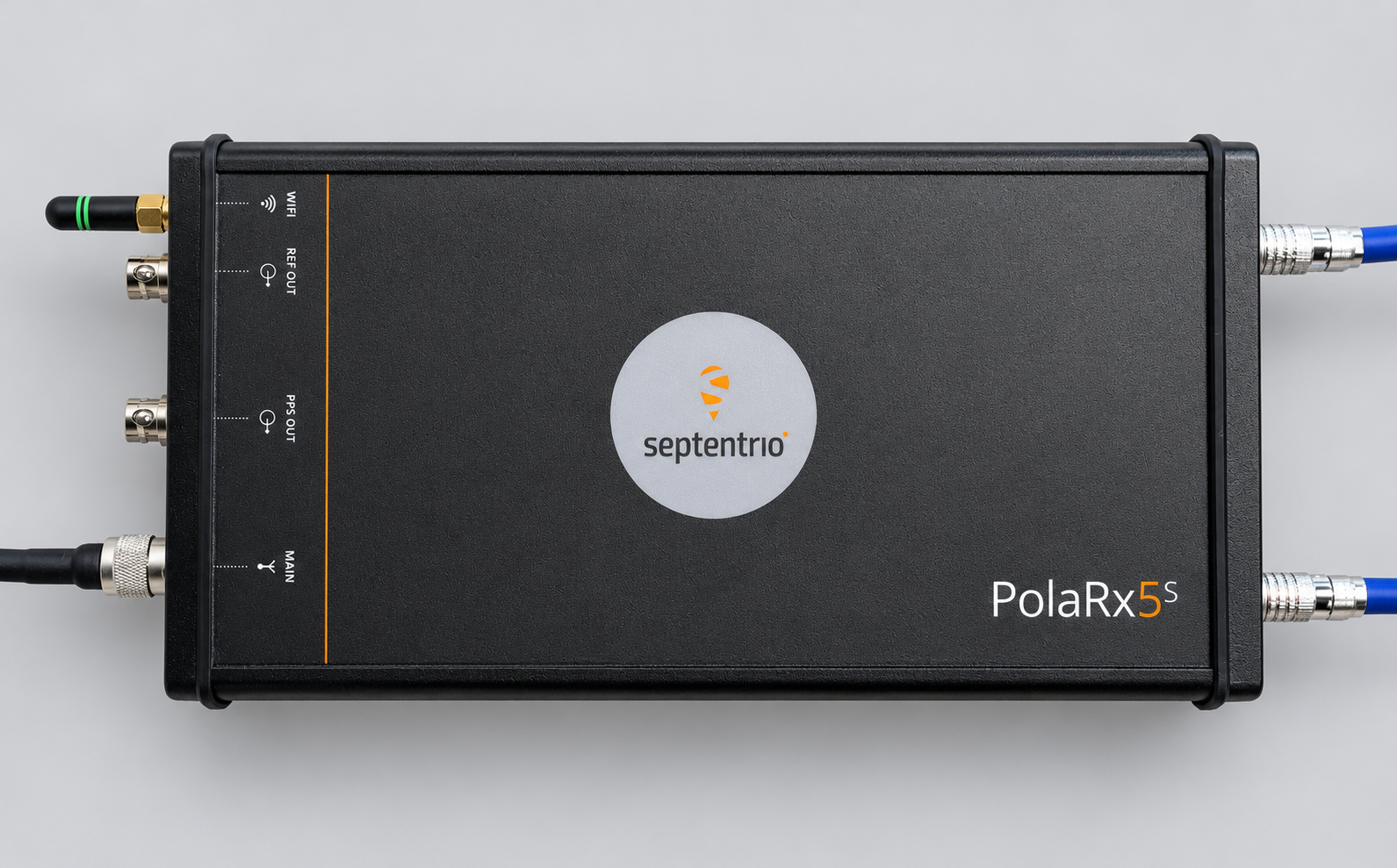
PolaRx5S IonosphericMonitoringGNSS Receiver
Purpose: A high-performance ionospheric GNSS reference receiver that provides extensive GNSS measurements for Total Electron Content (TEC) monitoring, built on the multi-frequency PolaRx5 platform.
Features:
- Multi-frequency, multi-constellation GNSS tracking (GPS, GLONASS, Galileo, BeiDou, NavIC/IRNSS, QZSS, and SBAS).
- Real-time Total Electron Content (TEC) estimation.
- Real-time ionospheric scintillation monitoring using S4 and σφ indices.
- Raw measurement output up to 100 Hz for code, carrier phase, and signal intensity.
- 544 hardware channels for simultaneous satellite tracking.
- Ultra-low phase-noise oscillator for high-precision scintillation measurements.
- Multiple communication interfaces, including Ethernet, USB, serial, and Wi-Fi.
- Continuous data logging compatible with scientific monitoring networks.
Specifications:
- GNSS Tracking: Supported Constellations: GPS, GLONASS, Galileo, BeiDou, QZSS, NavIC (IRNSS), and SBAS; Signal Tracking: Multi-frequency, multi-constellation GNSS; Channels: Up to 544 hardware GNSS channels; Maximum Tracking Rate: Up to 100 Hz; Supported Signals: L1, L2, L5, E1, E5a, E5b, E6, B1, B2, B3, and corresponding GNSS frequencies.
- Positioning Performance: Positioning Modes: Single Point, Differential GNSS (DGNSS), PPP; Carrier Phase Measurements: High-precision scientific-grade; Observation Rate: Up to 100 Hz; High-precision Phase Tracking: Suitable for geodetic and scientific applications.
- Ionospheric Monitoring: TEC Measurement: Real-time Total Electron Content (TEC); Scintillation Monitoring: S4 and σφ (Sigma Phi) indices; Scintillation Outputs: Phi01, Phi03, Phi1, Phi30, Phi60, CCD, and SI; Applications: Space weather monitoring and ionospheric research.

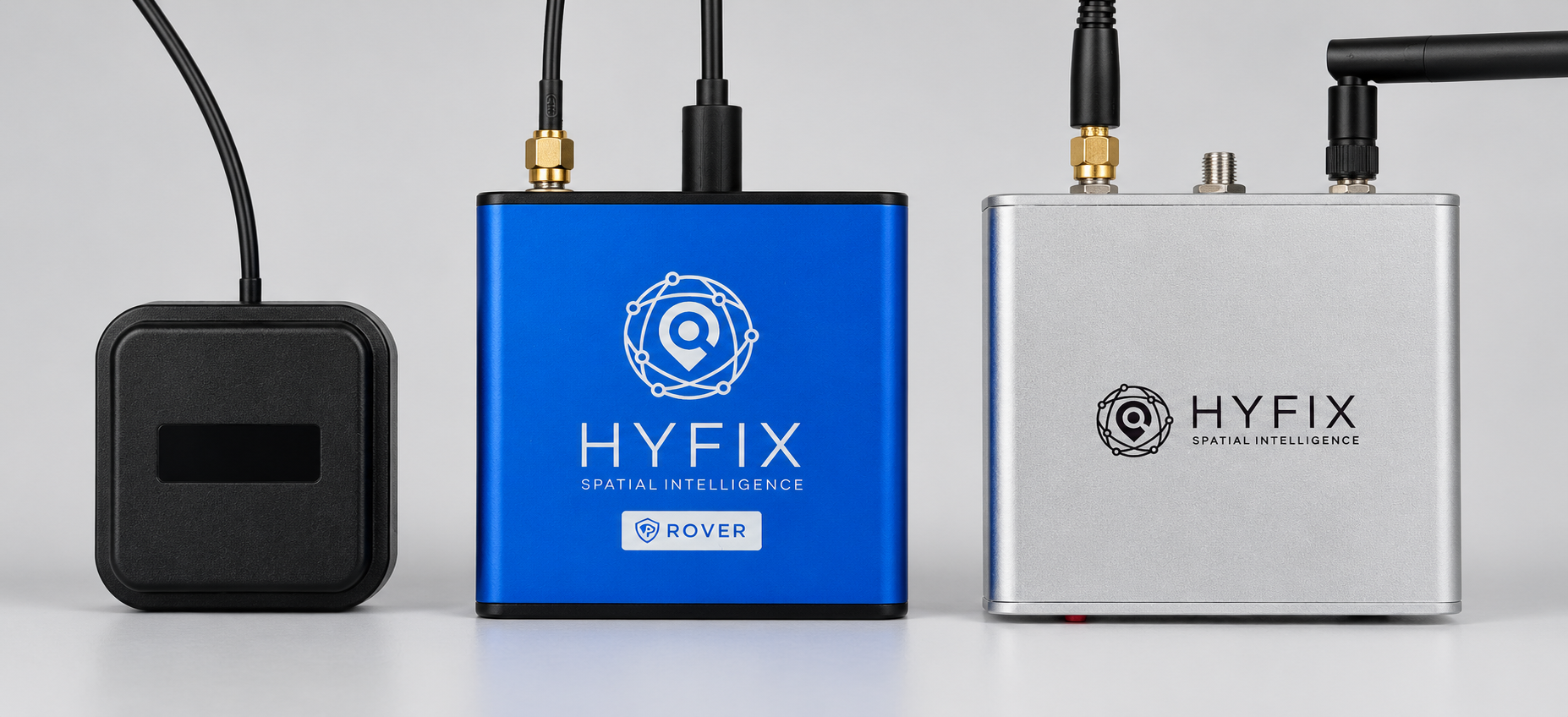
HYFIX GNSS Receiver
Purpose: The HYFIX Rover is a high-precision GNSS receiver designed for centimeter-level positioning using Real-Time Kinematic (RTK) corrections.
Features:
- Multi-constellation GNSS support (GPS, GLONASS, Galileo, BeiDou, NavIC, QZSS, and SBAS).
- Multi-frequency signal tracking for improved positioning accuracy.
- Centimeter-level RTK positioning capability.
- High-precision carrier-phase and code measurements.
- Supports Real-Time Kinematic (RTK) and Network RTK (NTRIP) corrections.
- Fast RTK initialization and ambiguity resolution.
- High-performance GNSS chipset with up to 1,408 tracking channels.
- Suitable for land surveying, construction, mining, agriculture, and infrastructure projects.
Specifications:
- GNSS Tracking: Supported Constellations: GPS, GLONASS, Galileo, BeiDou, NavIC (IRNSS), QZSS, and SBAS; Signal Tracking: Multi-frequency, multi-constellation; Channels: Up to 1,408 GNSS channels; Supported Frequencies: L1, L2, L5, E1, E5a, E5b, B1, B2.
- Positioning Performance: RTK Accuracy: ±8 mm + 1 ppm (horizontal), ±15 mm + 1 ppm (vertical); Static Accuracy: ±3 mm + 0.5 ppm; Single-Point Positioning: Less than 1.5 m CEP; DGPS Accuracy: Less than 0.4 m; PPP Support: Yes; RTK Initialization Time: Less than 10 seconds (typical); Reacquisition Time: Less than 1 second.
- Data Formats: Output Formats: NMEA-0183; Correction Formats: RTCM 3.x; Logging Formats: RINEX; Correction Services: RTK, Network RTK (NTRIP), and PPP.
- Power Specifications: Battery Type: Rechargeable lithium-ion; Battery Life: Up to 12 hours; Power Consumption: Low-power operation.
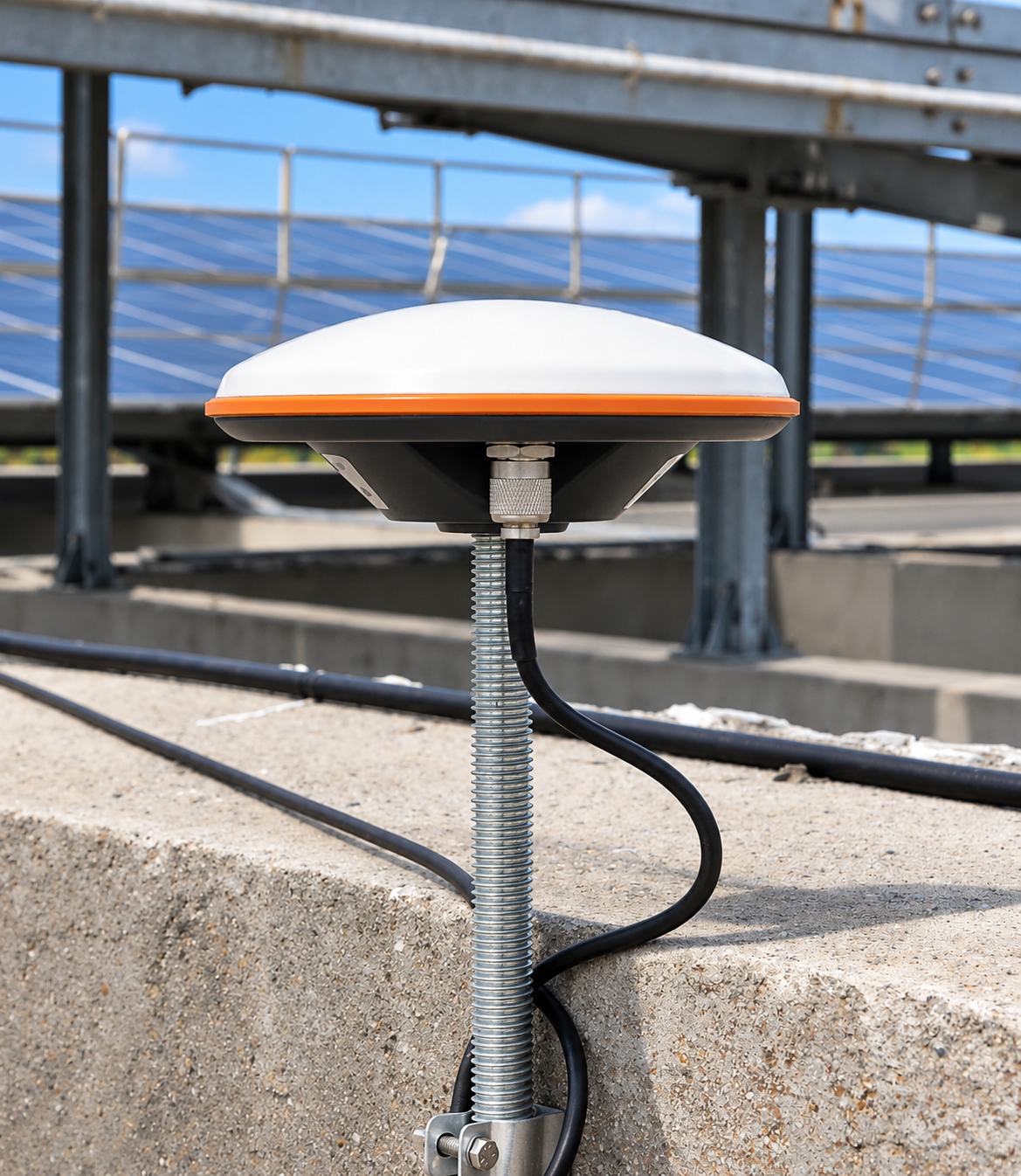
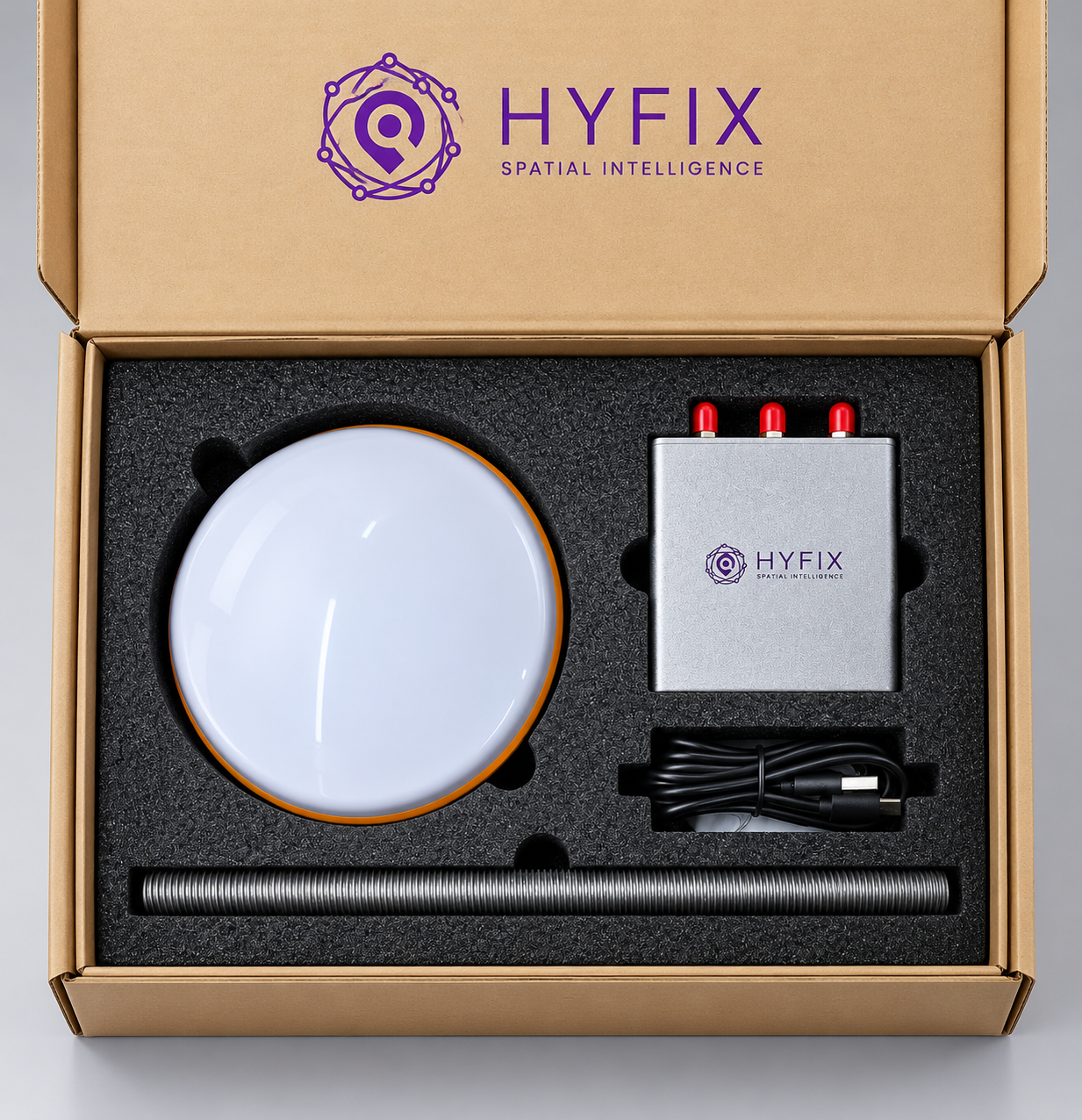
CORS Network – Equipment
Equipment Included:
- HyFix Spatial Intelligence Kit
- GNSS Antenna on Solar Array
- GEOMEASURE GNSS Handheld Device
- GEOIIPULSE Rugged GNSS Device
Purpose:
A CORS network provides continuous GNSS observations and correction data to enable centimeter-level positioning, geodetic surveying, mapping, infrastructure monitoring, and scientific research using RTK, Network RTK, and PPP techniques. The network integrates GNSS reference equipment, antennas, and rover devices to support precise positioning, field measurements, and GNSS data collection across different environments.
Features:
- Continuous tracking of multiple GNSS constellations, including GPS, GLONASS, Galileo, BeiDou, and NavIC.
- High-precision reference stations with fixed, accurately surveyed coordinates.
- Real-time GNSS correction distribution through NTRIP servers and clients.
- Supports RTK, Network RTK, and post-processing of GNSS data.
- Centralized monitoring, data logging, and remote management of reference stations.
- Supports RINEX and RTCM data formats.
- Enables reliable positioning over wide geographical areas through multiple reference stations.
- Integrates GNSS antennas, solar-powered installation options, handheld receivers, and rugged GNSS devices for field operations.
- Supports surveying, geodesy, agriculture, construction, infrastructure monitoring, and scientific research.
Specifications:
- GNSS Tracking: Multi-constellation and multi-frequency satellite tracking, depending on the receiver and supported signals.
- Positioning Performance: Centimeter-level accuracy with RTK corrections; actual accuracy depends on baseline distance, GNSS conditions, receiver quality, and correction service.
- Network Infrastructure: Multiple fixed GNSS reference stations connected to a central processing or correction-distribution system.
- Data Formats: RTCM for real-time corrections; RINEX for raw observation storage and post-processing.
- Communication Interfaces: Ethernet, internet connectivity, and NTRIP-based correction distribution, depending on equipment configuration.
- Timing Performance: Optional 1 PPS and frequency-reference outputs, depending on the receiver.
- Power System: Solar-powered installation options for suitable GNSS antenna and reference-station configurations.
- Field Equipment: Handheld and rugged GNSS devices for field surveying, positioning, and data collection.
- Applications: High-precision surveying, mapping, geodetic monitoring, GNSS research, infrastructure development, and precise positioning.

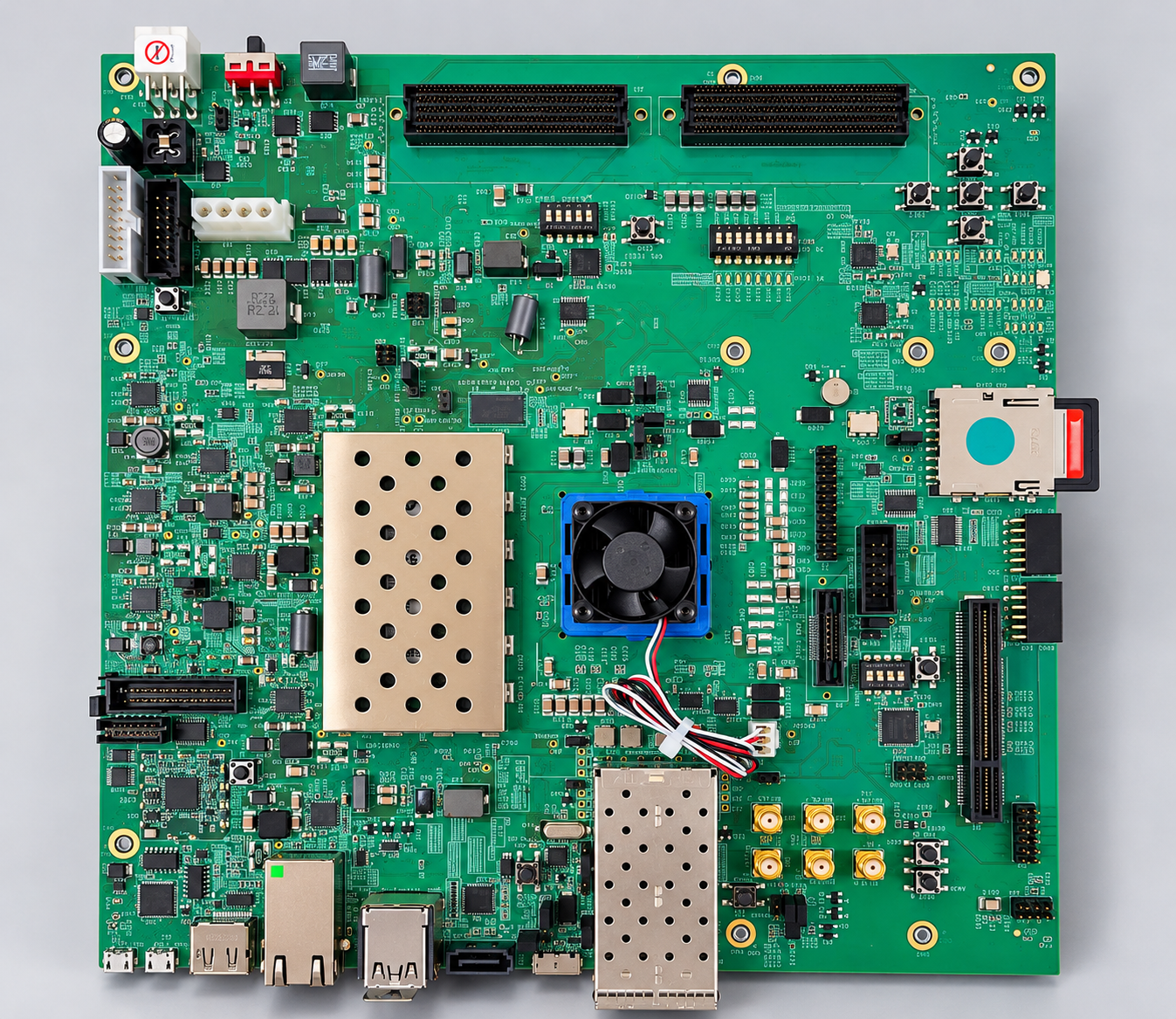
HATI Board – High-Accuracy Time Interval Measurement
Purpose:
The HATI (High Accuracy Time Interval) board is used for precise measurement of time intervals between timing signals, such as 1 PPS outputs from GNSS receivers, atomic clocks, and White Rabbit synchronization systems. It supports timing accuracy evaluation, synchronization testing, and validation of time and frequency distribution in GNSS and precision-timing laboratories.
Features:
- High-precision time interval measurement for timing signal comparison.
- Supports measurement of time differences between reference and device-under-test signals.
- Designed for integration with FPGA-based timing systems and White Rabbit infrastructure.
- Supports PPS-based timing measurements for GNSS and network synchronization experiments.
- Can be integrated with the ZCU102 FPGA platform, depending on the board configuration.
- Suitable for evaluating synchronization performance, timing offsets, and measurement stability.
- Supports laboratory testing of GNSS timing receivers, NTP/PTP systems, and precision reference clocks.
Specifications:
- Measurement Capability: Time interval and timing-offset measurement between reference and test signals.
- Input Signals: PPS and other supported timing signals, depending on the board configuration.
- Timing Interface: FPGA-based digital timing interface.
- System Integration: Compatible with the supported HATI Starting Kit configuration, including ZCU102 and White Rabbit equipment.
- Applications: GNSS timing validation, PPS comparison, time interval measurement, White Rabbit synchronization testing, and FPGA-based timing experiments.
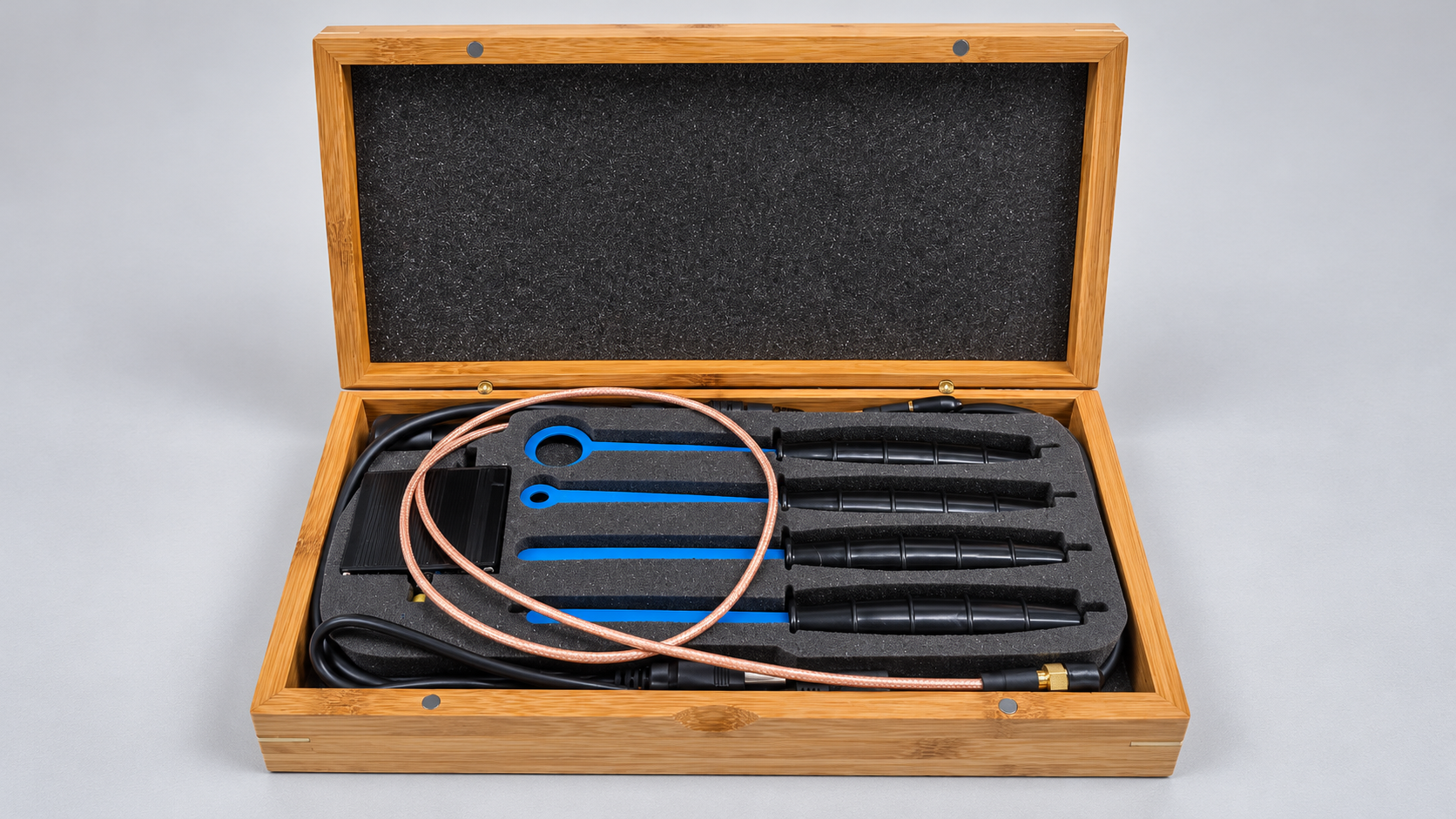
Probe Set – Oscilloscope Measurement Accessories
Purpose:
A probe set is used to connect electronic circuits to test and measurement instruments, such as oscilloscopes, for observing voltage waveforms, digital signals, pulse characteristics, and timing behavior. It supports signal analysis and troubleshooting in GNSS, FPGA, RF, and embedded-system experiments.
Features:
- Enables electrical signal measurement at circuit test points.
- Supports analog waveform and digital pulse measurements.
- Includes passive voltage probes and accessories, depending on the set.
- Supports signal integrity analysis and troubleshooting.
- Provides probe attenuation options, such as 1× and 10×, depending on the probe model.
- Includes accessories such as probe tips, ground leads, hooks, and clips.
- Suitable for measuring clock signals, PPS signals, trigger pulses, and FPGA I/O signals.
Specifications:
- Probe Type: Passive oscilloscope probes; exact type depends on the model.
- Bandwidth: Depends on the probe model and connected instrument.
- Attenuation Ratio: Typically 1× / 10×, depending on the probe.
- Input Impedance: Typically 1 MΩ in 10× mode, subject to probe specifications.
- Maximum Input Voltage: Depends on probe model, attenuation, frequency, and safety rating.
- Connectivity: Oscilloscope-compatible connector, commonly BNC.
- Accessories: Probe tips, ground leads, hook clips, and adjustment tools, depending on the kit.
- Applications: Oscilloscope measurements, FPGA debugging, GNSS timing signals, clock analysis, and embedded-system troubleshooting.
Let's Build the Future With Us
Whether you are a researcher, startup, industry partner, government organisation, academic institution, or student, IITTNiF provides opportunities to innovate, collaborate, develop technologies, and create national impact.