
Problem Statement
Indoor environments often host a complex network of utilities and conduits, which are frequently undocumented or poorly mapped. During infrastructure modifications or renovation, the risk of damaging hidden services such as electrical lines, water pipes, or communication ducts is high, leading to costly repairs and operational downtime. Additionally, understanding subsurface soil variability beneath building floors is vital for evaluating foundation stability and long-term performance. Conventional excavation-based methods are disruptive and unsuitable for operational buildings, creating the need for a non-destructive and high-resolution diagnostic approach.
Overview
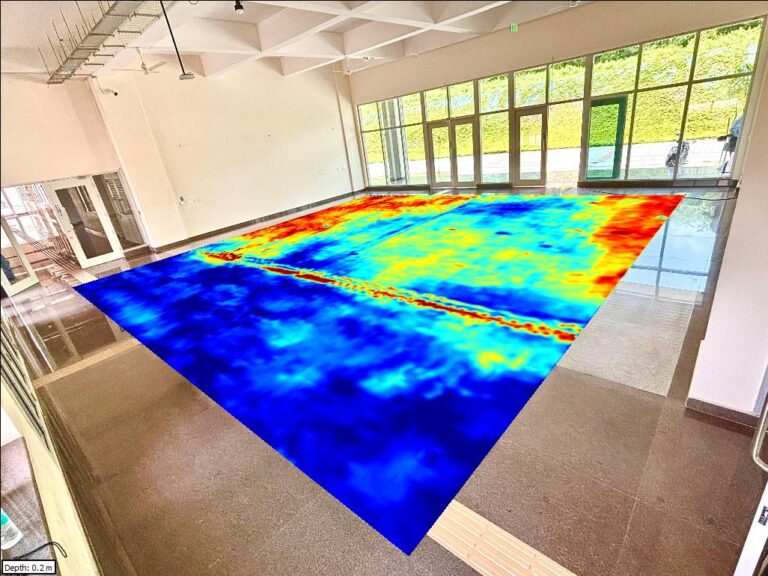
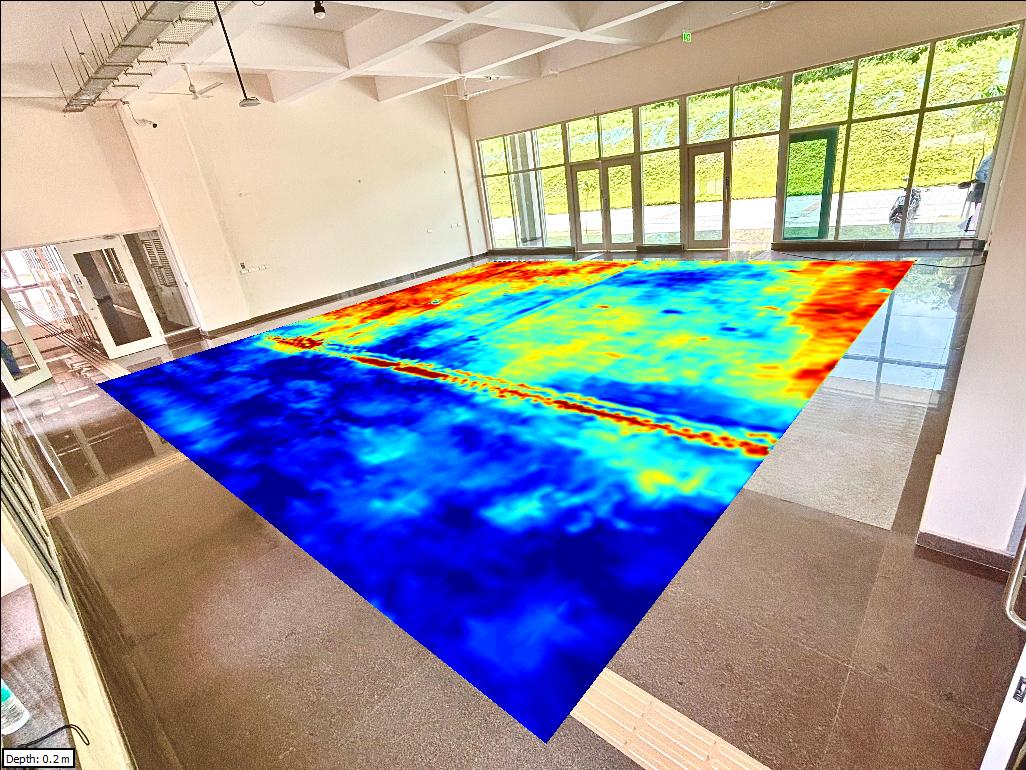
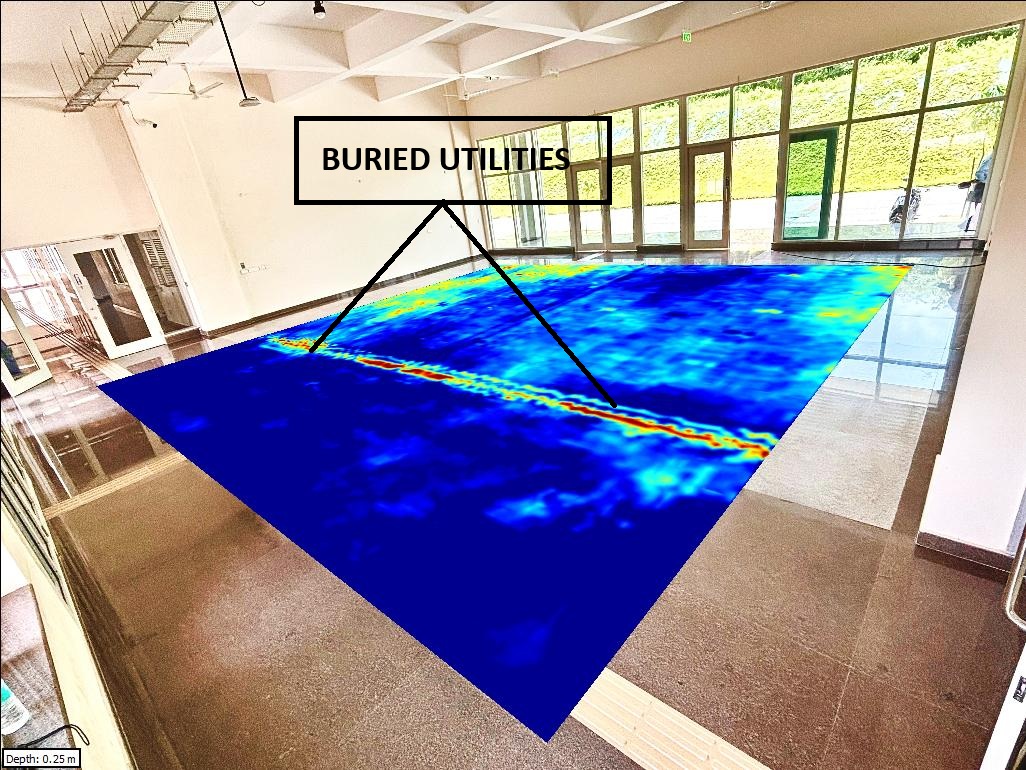
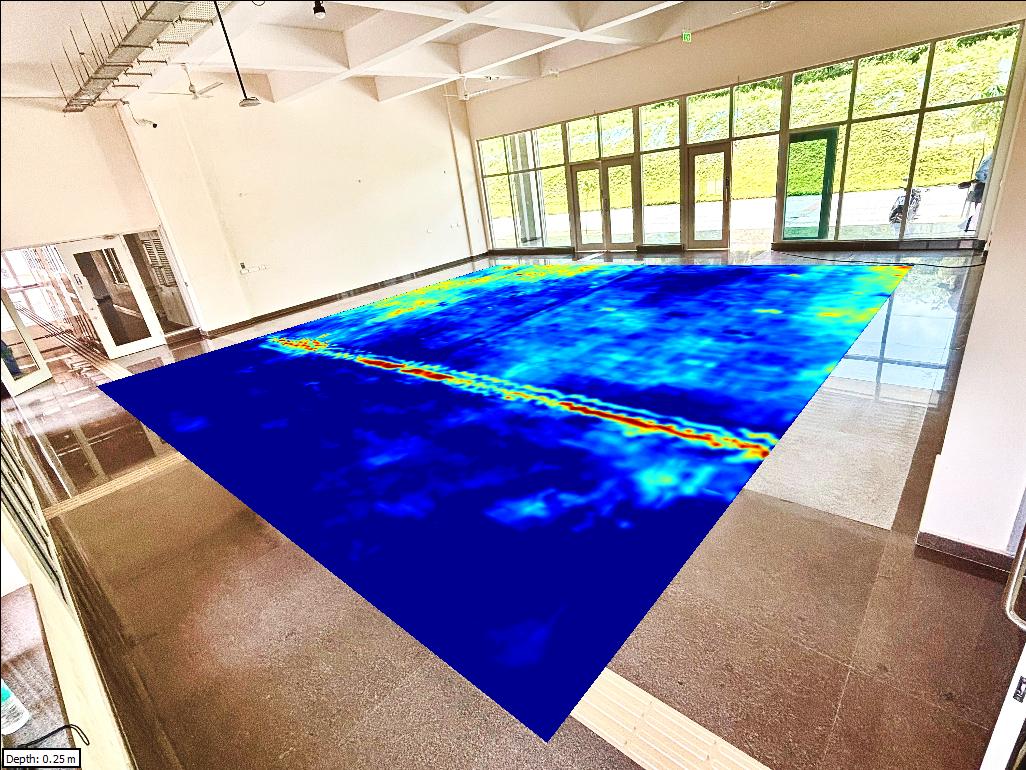
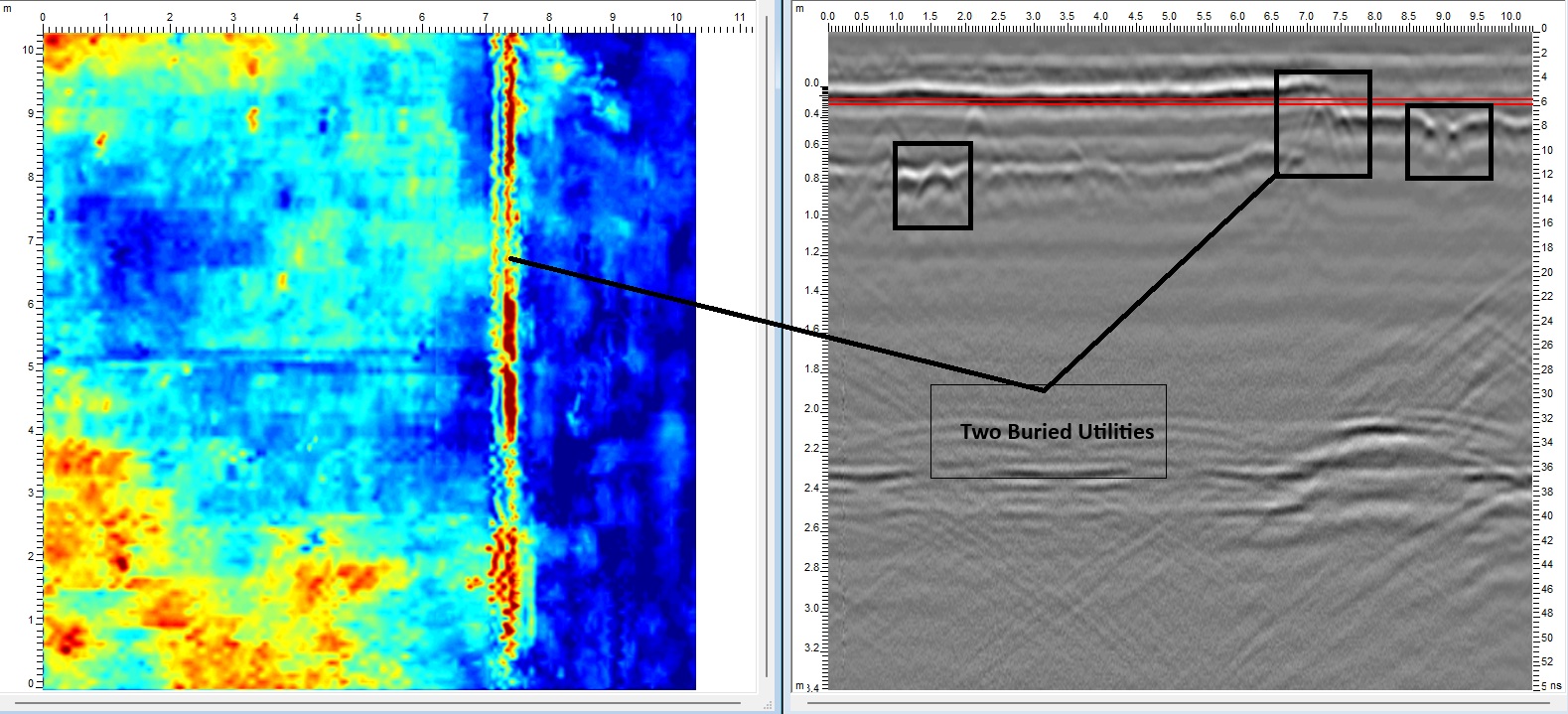
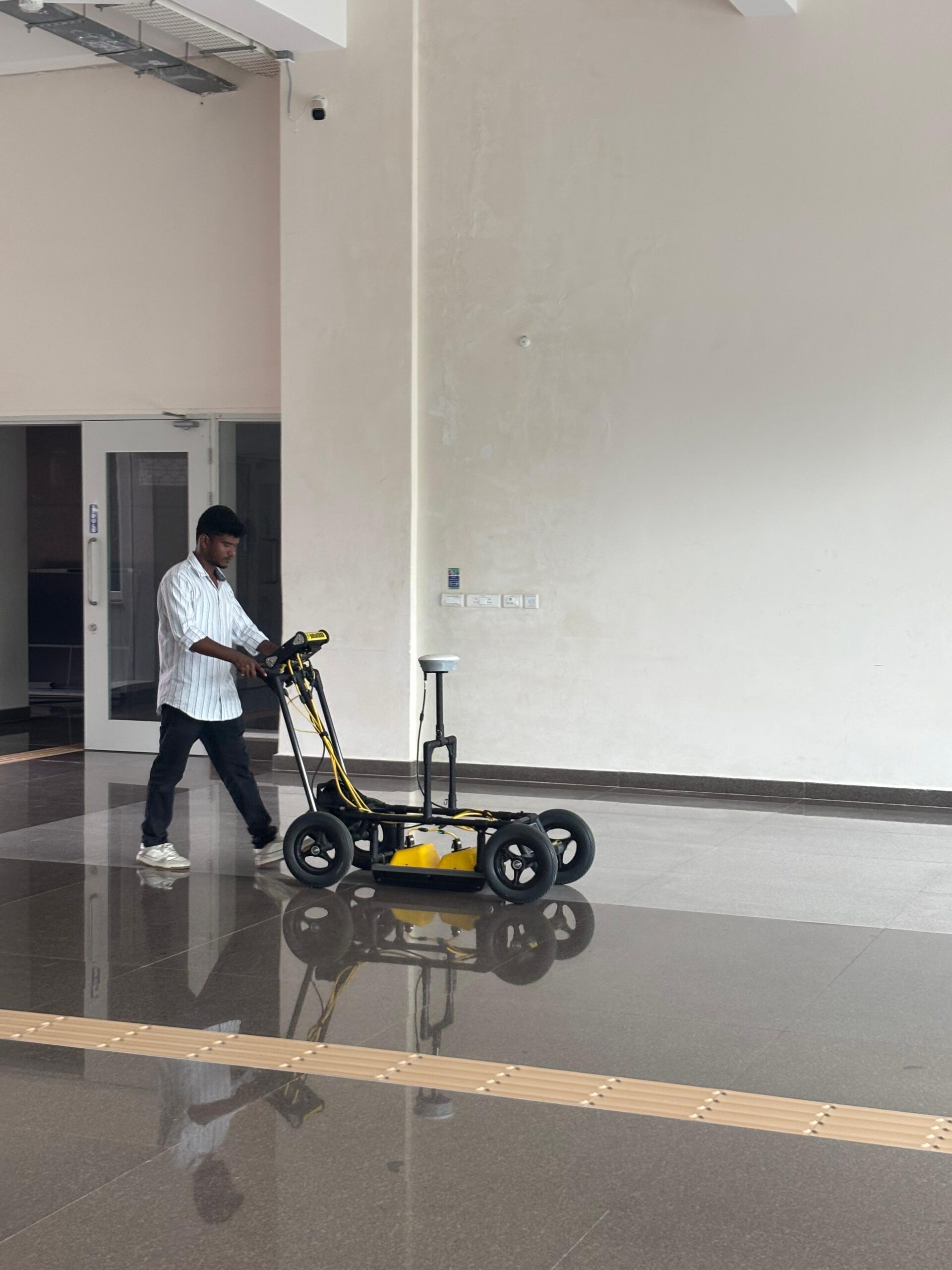
A Ground Penetrating Radar (GPR) survey was carried out in the lobby area of the CIF building, IIT Tirupati campus to detect underground utilities and assess soil variations beneath the floor. The survey spanned 110.25 m² with a dense 10 cm grid spacing, enabling detailed coverage and high spatial resolution.
Methodology
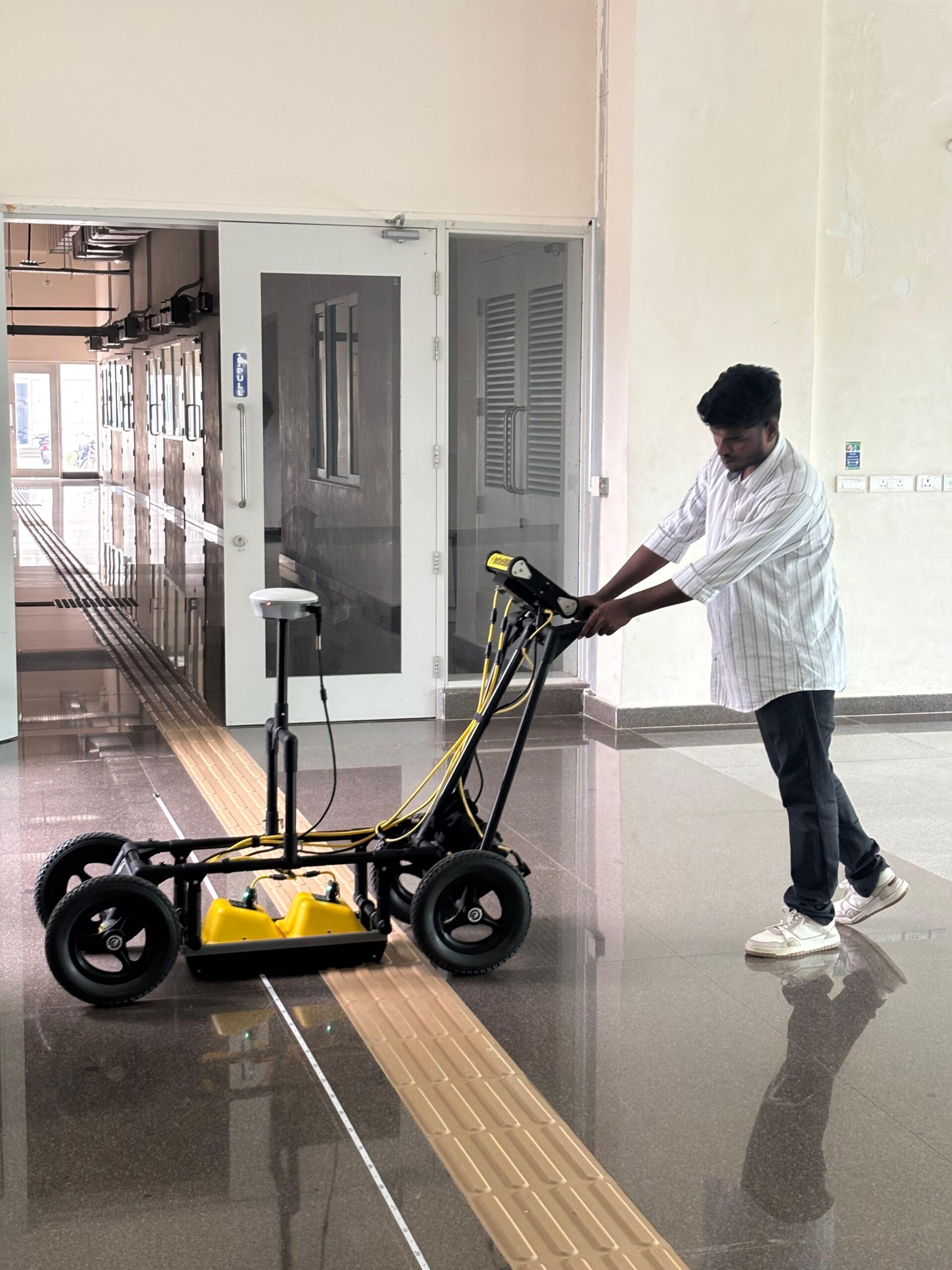
A 500 MHz antenna with an effective bandwidth of 250–750 MHz was deployed, offering an optimal balance between penetration depth and resolution for utility mapping and soil profiling. Radargrams were acquired in multiple parallel profiles, processed using advanced 2D and 3D visualization workflows, and analyzed for anomalies and reflection signatures.
Key Findings
The processed results revealed critical subsurface information:
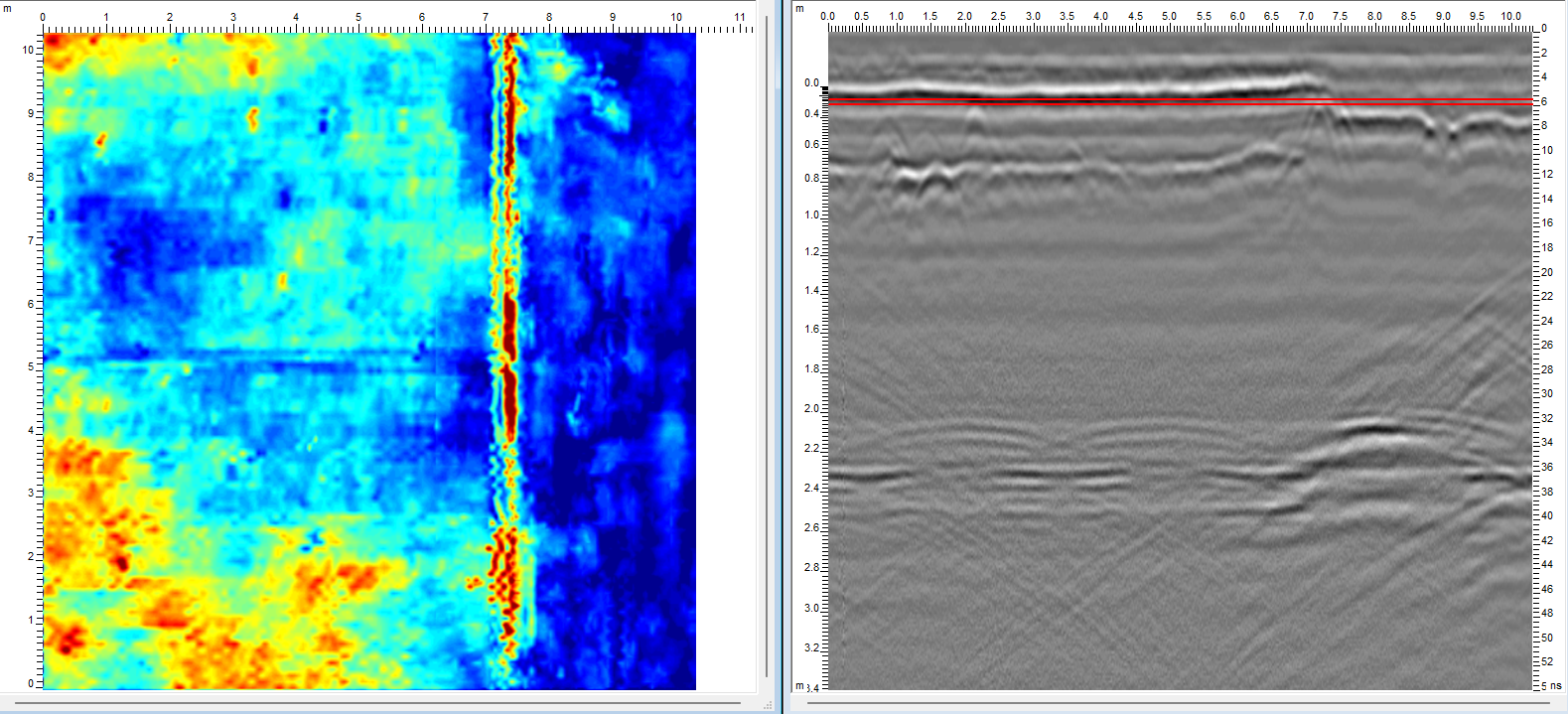
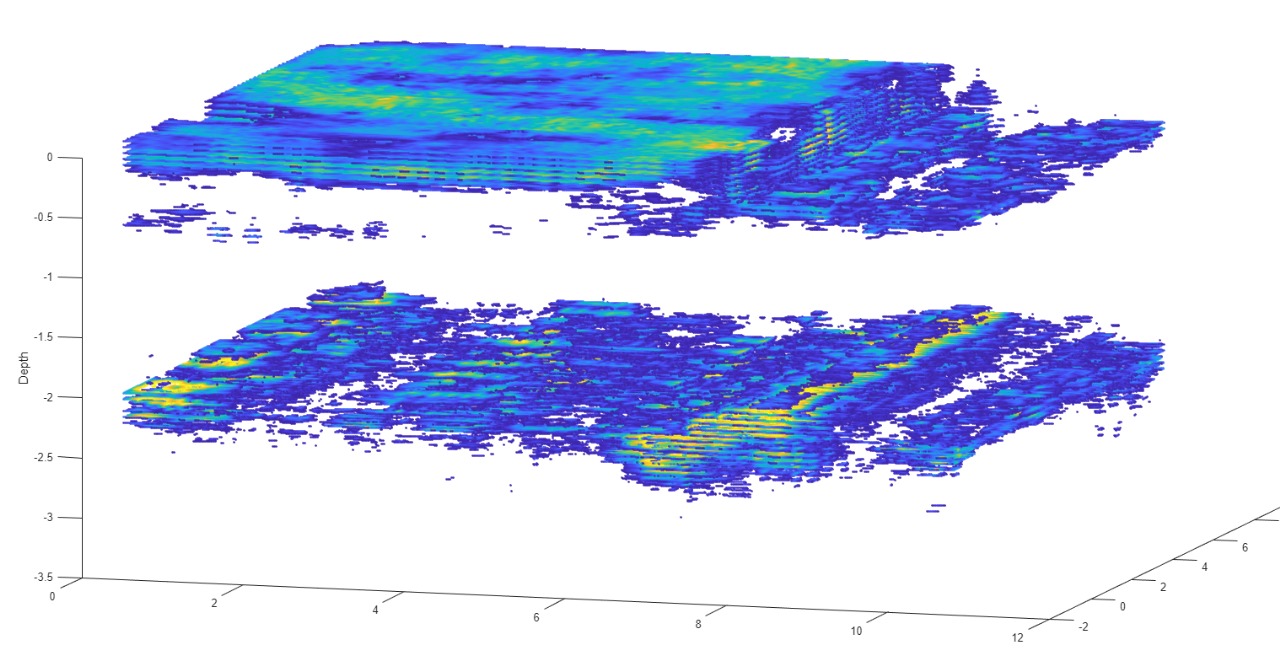
- Utility Detection: Four distinct utilities were identified, grouped into two pairs at varying depths, highlighting multi-service congestion zones.
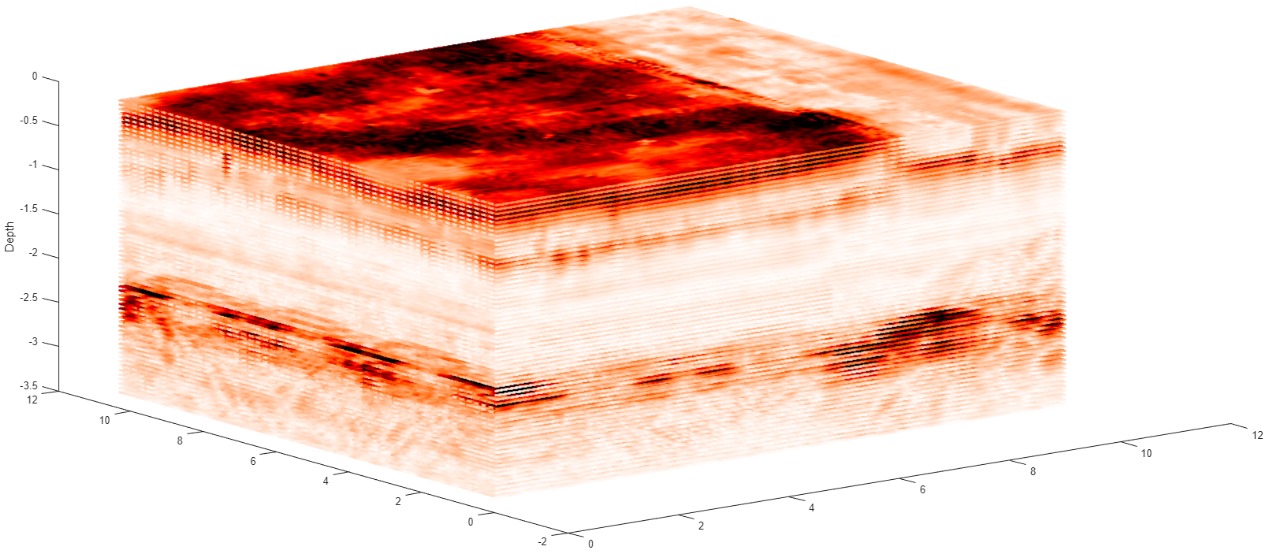
- Structural Reflections: Air wave reflections from the roof ceiling beams produced clear repeating patterns, showcasing the sensitivity of GPR to overhead structures in indoor settings.
- Floor Composition: The presence of a granite tile floor covering enhanced signal clarity and reduced attenuation, enabling sharper imaging of subsurface features.
- Soil Variation Mapping: Reflection contrasts indicated heterogeneities in sub-floor soil conditions, suggesting localized variations in compaction or moisture distribution.
Engineering Impact
This indoor GPR application demonstrated the technique’s ability to:
- Accurately locate utilities and reduce risks during renovation or drilling works.
- Provide non-invasive soil characterization beneath the built structure.
- Serve as a rapid, high-resolution method for indoor geotechnical assessments.
- Offer a reliable digital record for facility management and planning.
Conclusion
The case study highlights the effectiveness of GPR as a non-destructive tool for indoor investigations, capable of identifying hidden utilities, structural reflections, and soil variations beneath building floors. Its ability to operate without disrupting building operations makes it a valuable technique for civil engineering, facility maintenance, and asset management in modern infrastructure.
Let's Build the Future With Us
Whether you are a researcher, startup, industry partner, government organisation, academic institution, or student, IITTNiF provides opportunities to innovate, collaborate, develop technologies, and create national impact.