
High-Resolution Rebar Spacing Mapping for Safe Core-Cutting Location Selection Using 1000 MHz GPR
Problem Statement
Concrete core extraction requires precise knowledge of reinforcement layout, spacing, and cover depth to avoid cutting through rebars, embedded conduits, or other structural elements. Improper core placement can damage reinforcement, compromise structural integrity, and result in costly repairs. A high-resolution, non-destructive investigation was required to identify reinforcement-free zones and determine a suitable core-cutting location.
Overview
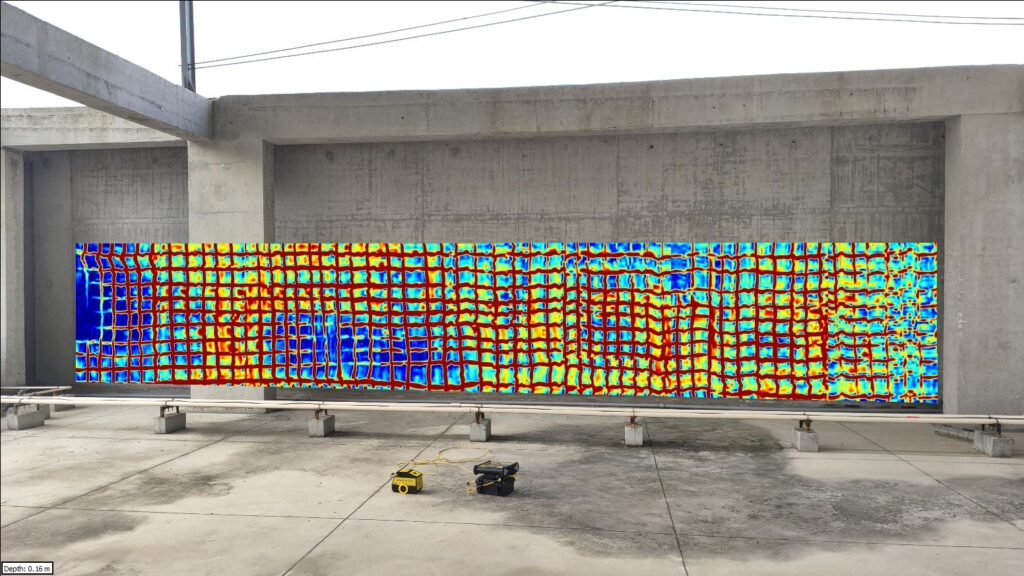
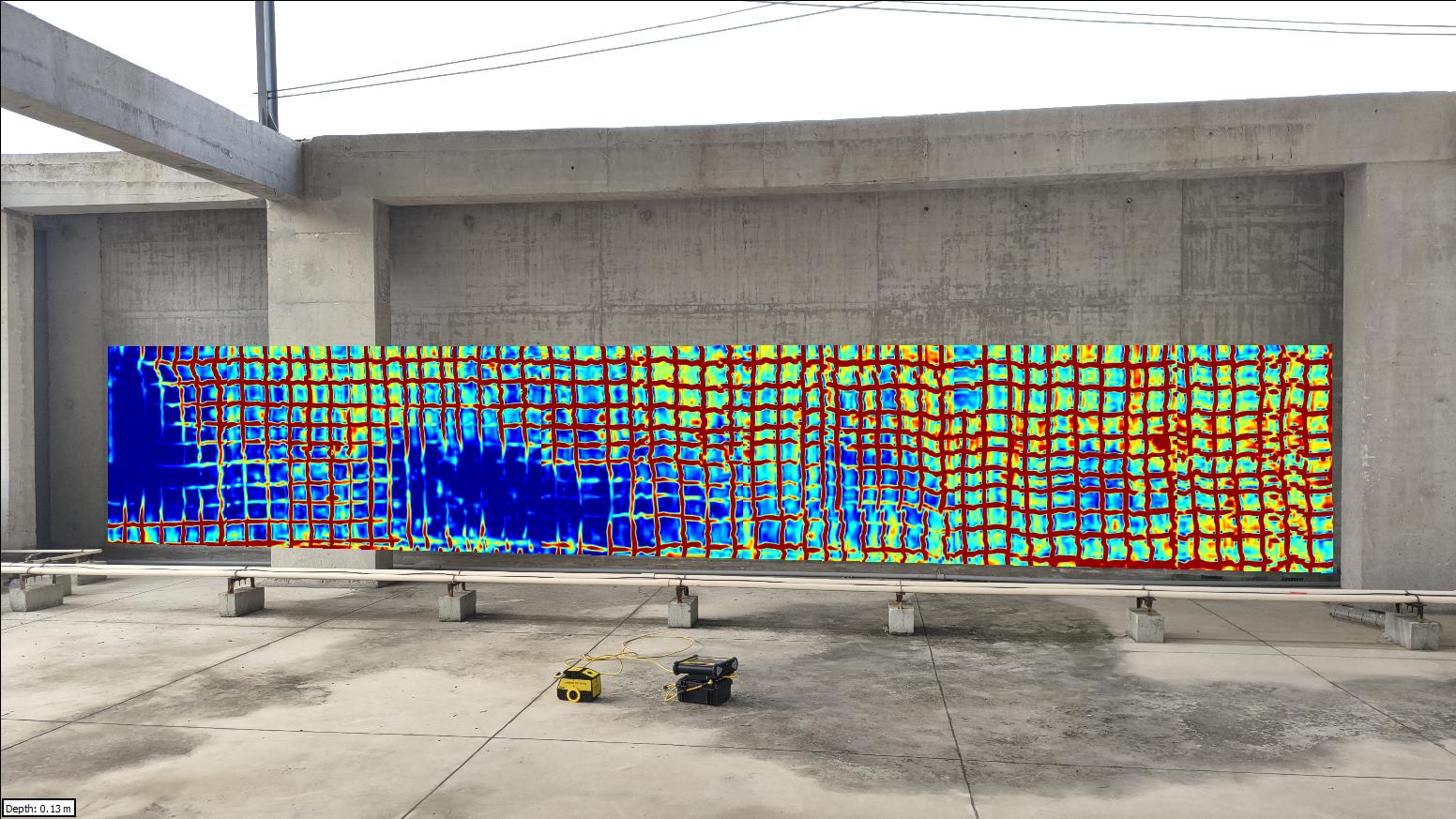
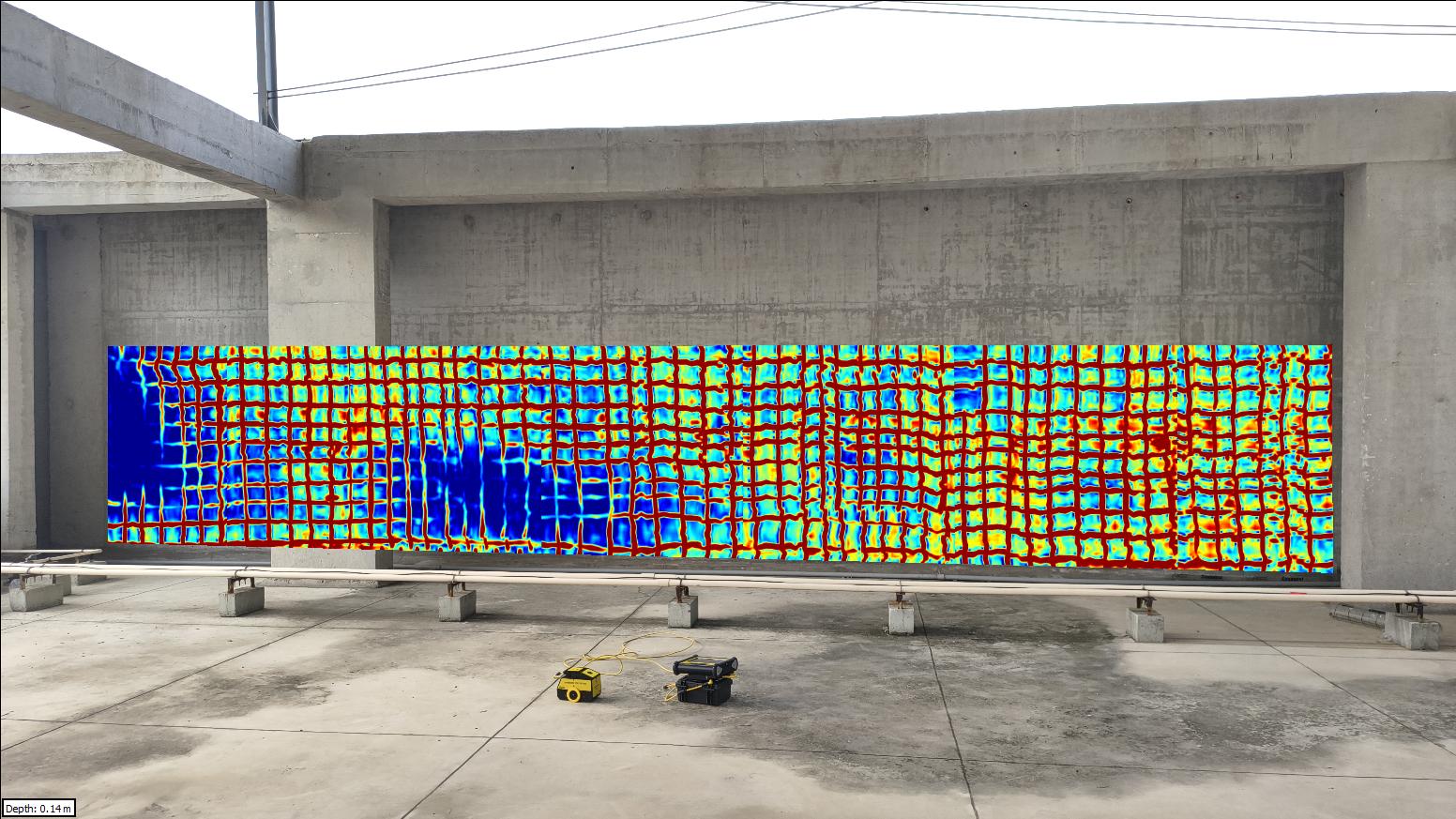
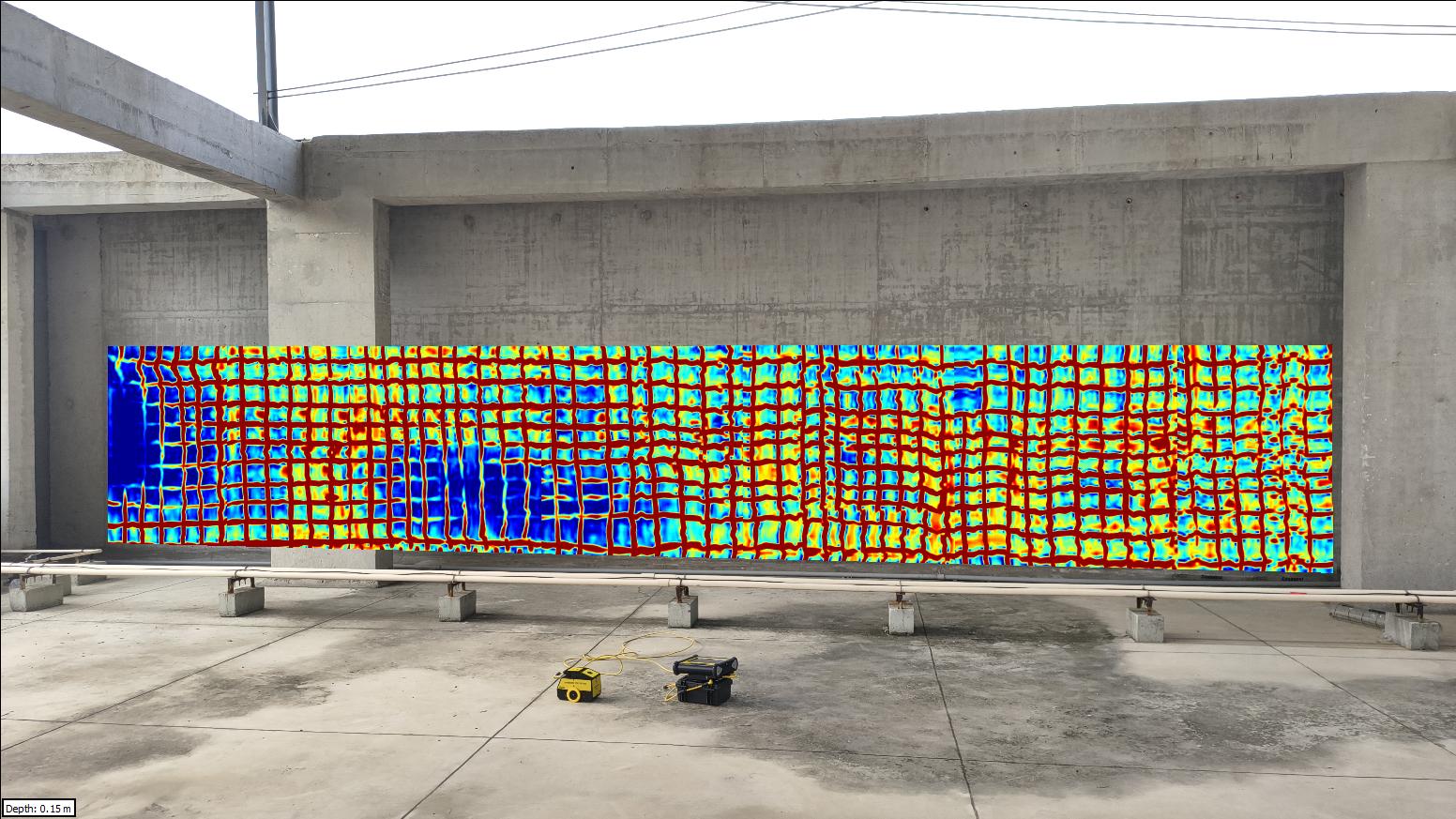
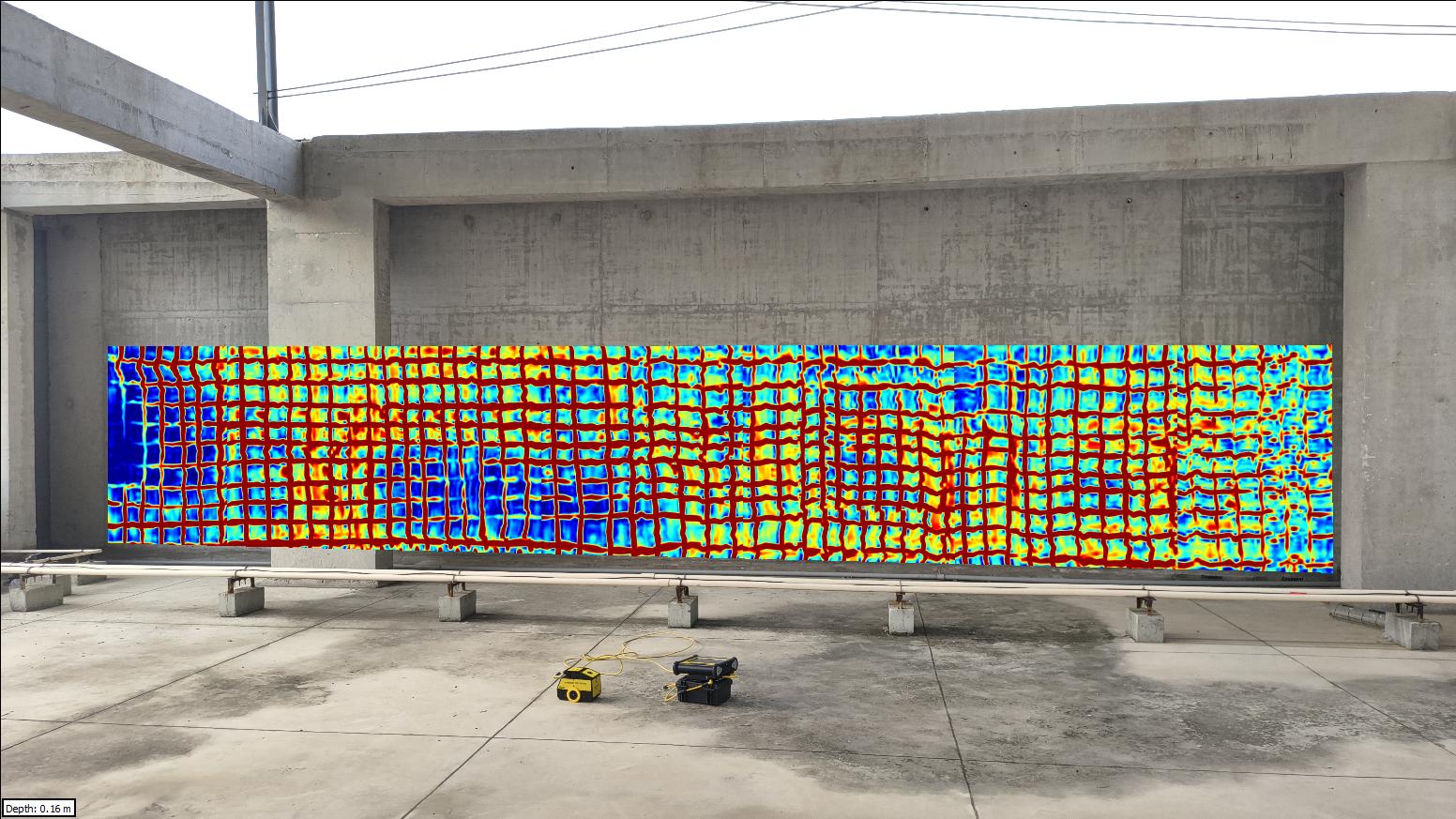
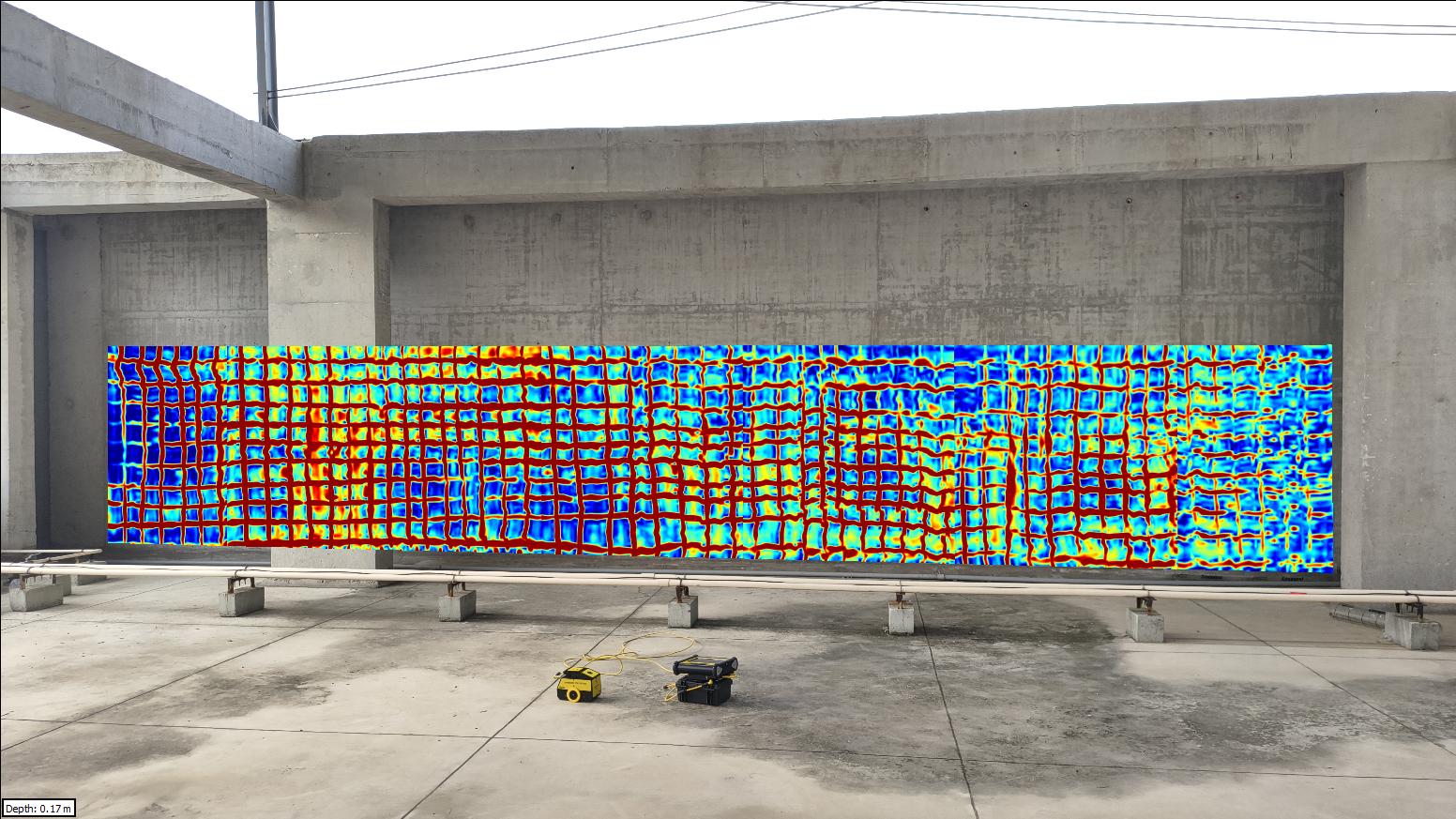
A high-frequency 1000 MHz GPR survey was conducted over the proposed concrete coring area to obtain detailed information on reinforcement distribution and subsurface features. The investigation focused on resolving closely spaced rebars, mapping the reinforcement grid, assessing concrete cover, measuring bar spacing, and identifying a suitable location for core extraction.
The high-frequency antenna was used to provide detailed imaging of shallow embedded objects and reinforcement patterns within the concrete slab.
Methodology
- Survey Design: High-density GPR scanning was performed using closely spaced parallel survey lines in two perpendicular directions to reconstruct the reinforcement grid and identify clear spaces between adjacent bars.
- Data Acquisition: 1000 MHz GPR data were collected over the proposed coring zone using a fine spatial sampling interval to capture detailed reinforcement signatures.
- Data Processing: Radar data were processed using background removal, filtering, gain adjustment, and amplitude analysis to enhance rebar reflections and improve visualization of the reinforcement layout.
- Rebar Mapping: Reinforcement locations were identified from radar reflections and mapped in plan view to determine the orientation, distribution, and spacing of rebars.
- Spacing & Cover Assessment: Rebar center-to-center spacing and concrete cover were evaluated from the processed radar data using site calibration and depth estimation.
- Core Location Selection: Reinforcement-free windows were identified and evaluated against the proposed core diameter and required safety clearance. The optimal location was selected away from mapped reinforcement and significant subsurface anomalies.
Key Findings
- High-resolution reinforcement mapping: The 1000 MHz GPR survey successfully delineated the reinforcement arrangement within the investigated concrete area.
- Rebar spacing assessment: The reinforcement grid was interpreted to determine bar orientation and center-to-center spacing in both directions.
- Concrete cover evaluation: Shallow reinforcement depth and cover variations were assessed from radar responses.
- Clear coring zones: Reinforcement-free areas were identified between adjacent bars, allowing potential core-cutting locations to be evaluated.
- Core location optimization: A suitable core-cutting location was selected within a clear zone, considering the proposed core diameter and clearance from the mapped reinforcement.
- Subsurface screening: The selected coring zone was assessed for visible radar signatures of additional embedded objects or anomalies.
Engineering Impact
- Supports safer and more precise concrete core extraction.
- Provides high-resolution reinforcement mapping for structural assessment and maintenance.
- Minimizes the likelihood of damaging reinforcement during drilling.
- Helps optimize core locations for concrete quality testing and material characterization.
- Provides a documented subsurface reference for engineering evaluation and future maintenance.
Conclusion
The 1000 MHz GPR investigation provided high-resolution imaging of reinforcement distribution within the concrete slab, enabling the assessment of rebar spacing, cover depth, and potential reinforcement-free coring locations. The approach supports informed core-cutting location selection while reducing the risk of reinforcement damage. The workflow demonstrates the applicability of high-frequency GPR for detailed concrete inspection, structural assessment, and non-destructive investigation prior to core extraction.
Let's Build the Future With Us
Whether you are a researcher, startup, industry partner, government organisation, academic institution, or student, IITTNiF provides opportunities to innovate, collaborate, develop technologies, and create national impact.