
Detection and Mapping of Buried Metallic Objects at IIT Tirupati Using an Overhauser Magnetometer
Problem Statement
Subsurface environments often conceal abandoned or undocumented metallic objects—such as buried pipes, metallic debris, discarded construction materials, utilities, and unidentified ferrous structures. Because these objects are not visible from the surface, they pose significant risks during excavation, construction, and site development, potentially causing equipment damage, project delays, or utility strikes. A magnetic survey was conducted to locate, characterize, and map buried metallic objects across the IIT Tirupati campus.
Overview
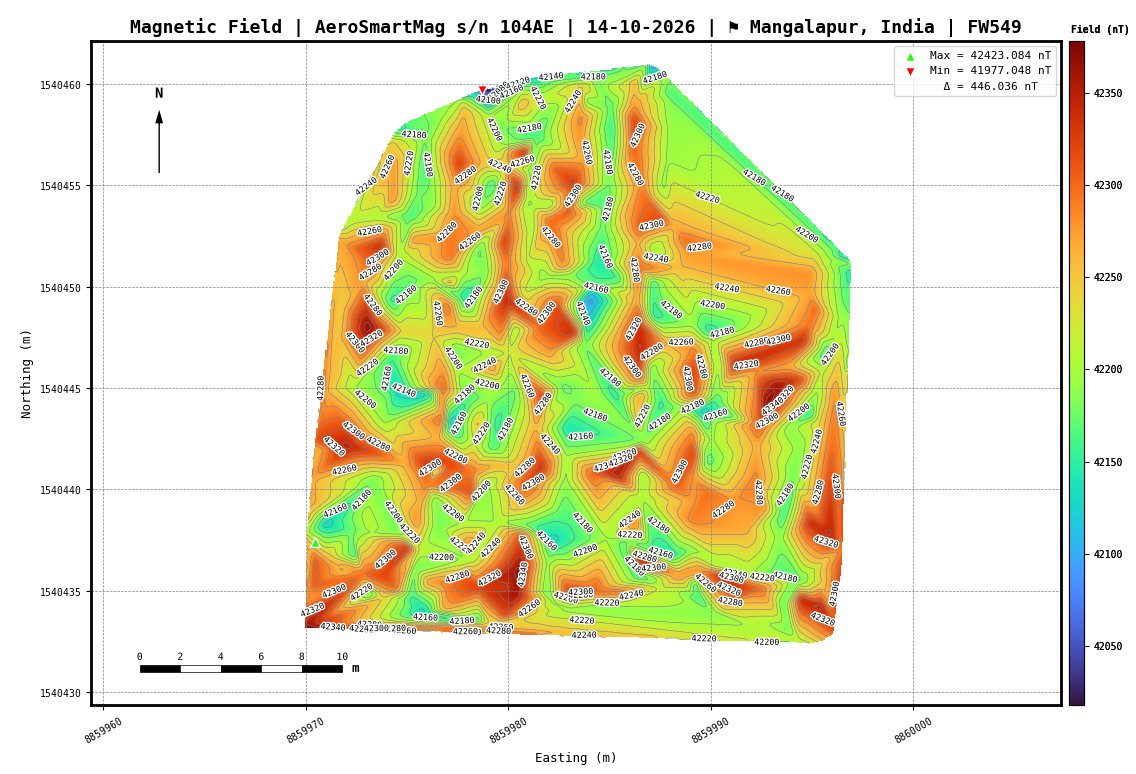
A ground-based magnetic survey was conducted across IIT Tirupati using an Overhauser magnetometer to detect localized magnetic anomalies caused by buried ferrous and metallic objects. The survey was carried out from 14 October 2026 to 18 November 2026, utilizing a 1-second sampling interval to capture continuous, high-resolution total magnetic field measurements across the investigated zones.
Methodology
- Survey Coverage: Continuous magnetic profiling was conducted across targeted open grounds and proposed development zones within the IIT Tirupati campus.
- Instrumentation: A high-sensitivity Overhauser magnetometer was deployed to measure subtle variations in the Earth’s total magnetic field induced by subsurface metallic masses.
- Sampling Interval: A 1-second recording interval was maintained to ensure dense spatial data acquisition and avoid missing small or shallow buried targets.
- Data Processing: Raw magnetic readings were corrected for diurnal variations and background regional gradients, then spatially analyzed to isolate sharp, localized dipolar and monopolar magnetic anomalies.
- Interpretation: Processed anomaly amplitudes, wavelengths, and spatial gradients were evaluated to estimate the presence, relative size, and approximate depth zones of buried metallic objects.
Key Findings
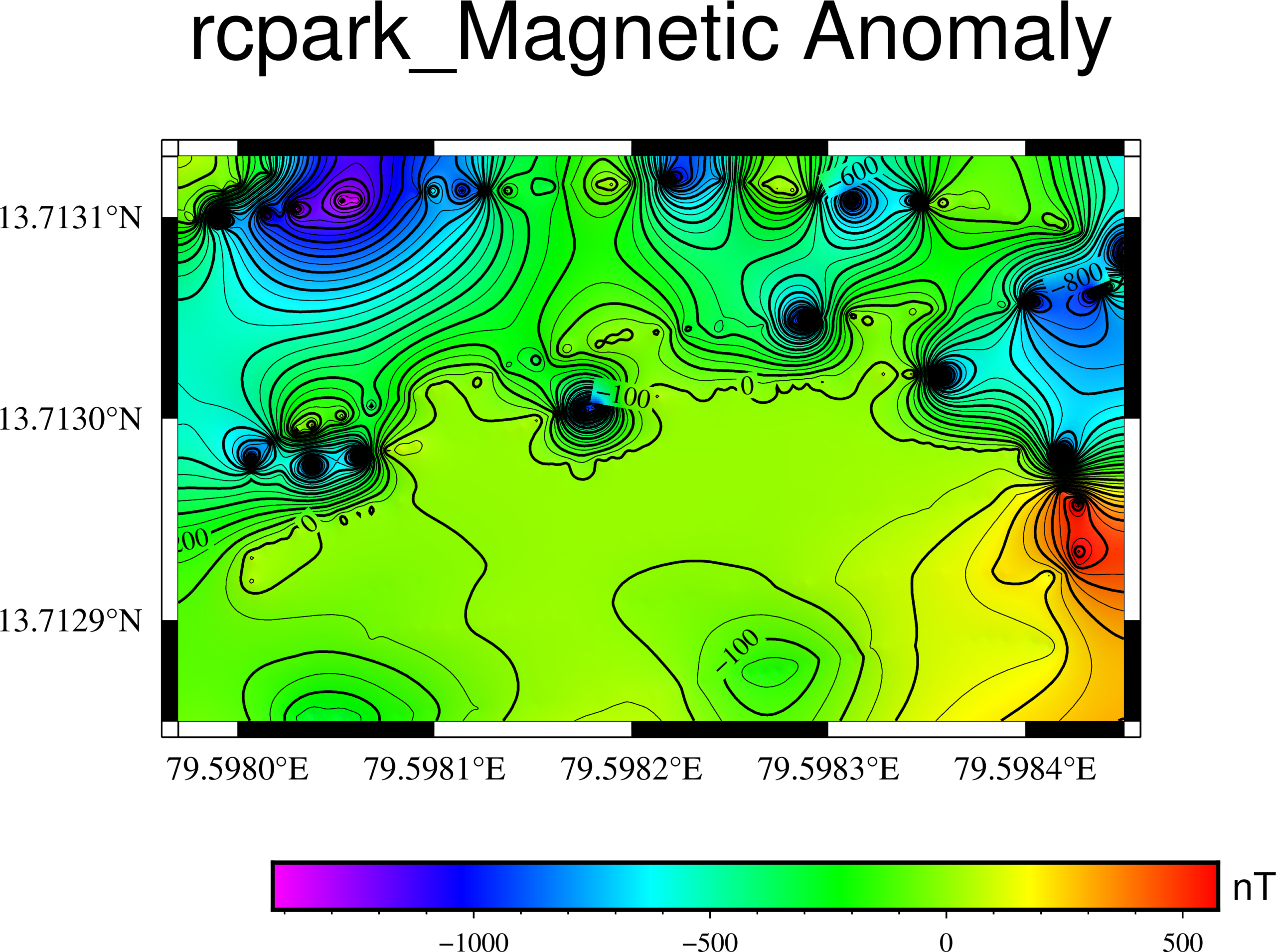
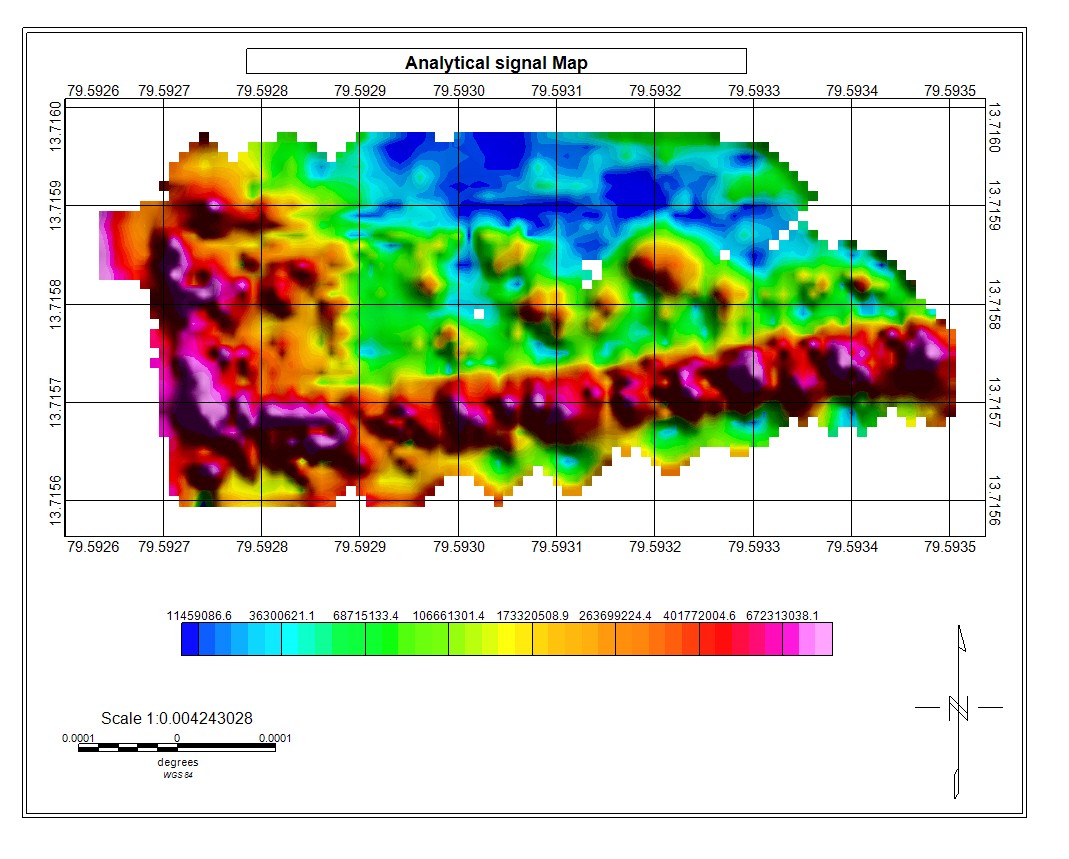
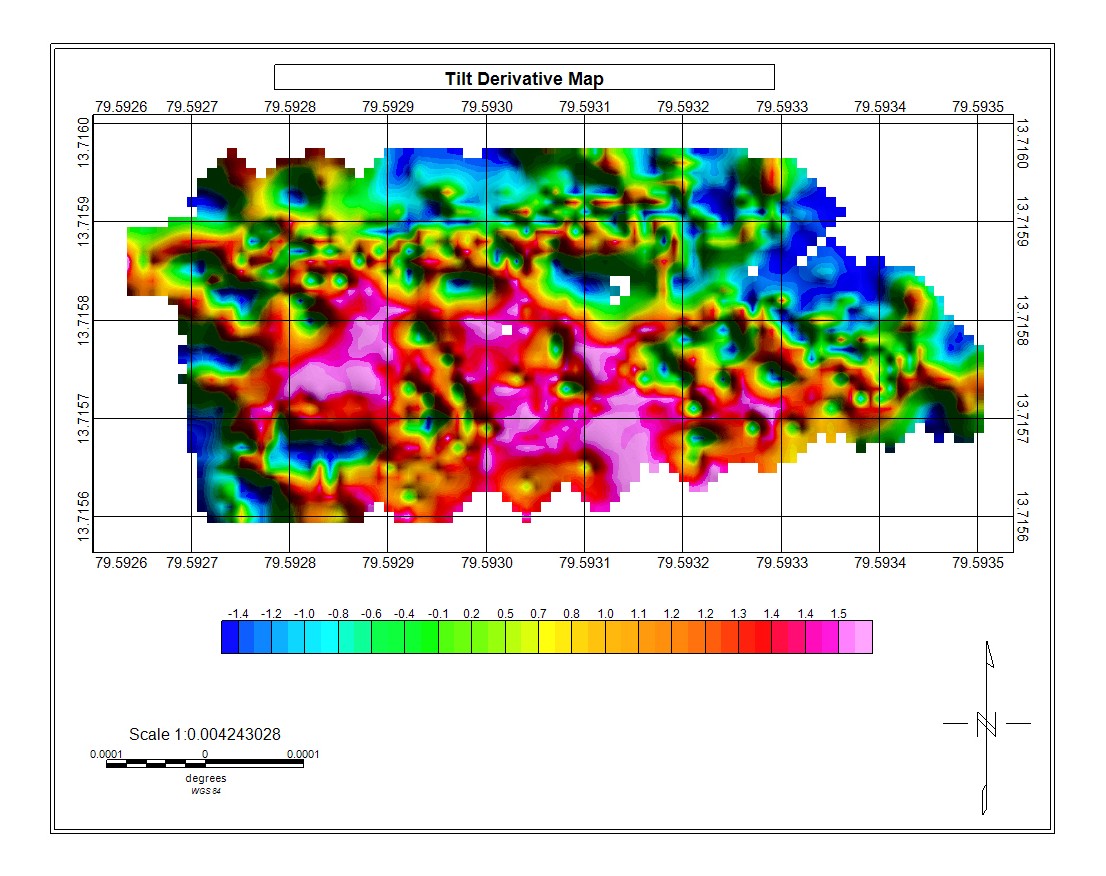
- Isolated Metallic Debris: High-amplitude, short-wavelength magnetic anomalies identified shallow buried metallic fragments and discarded construction hardware.
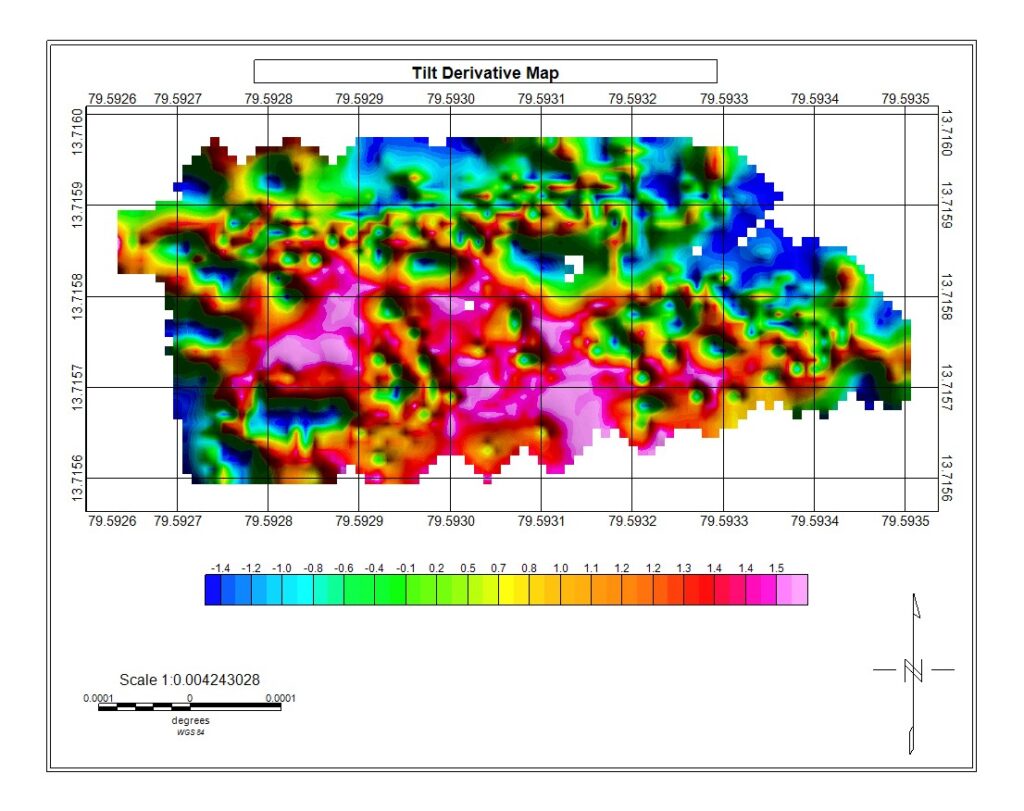
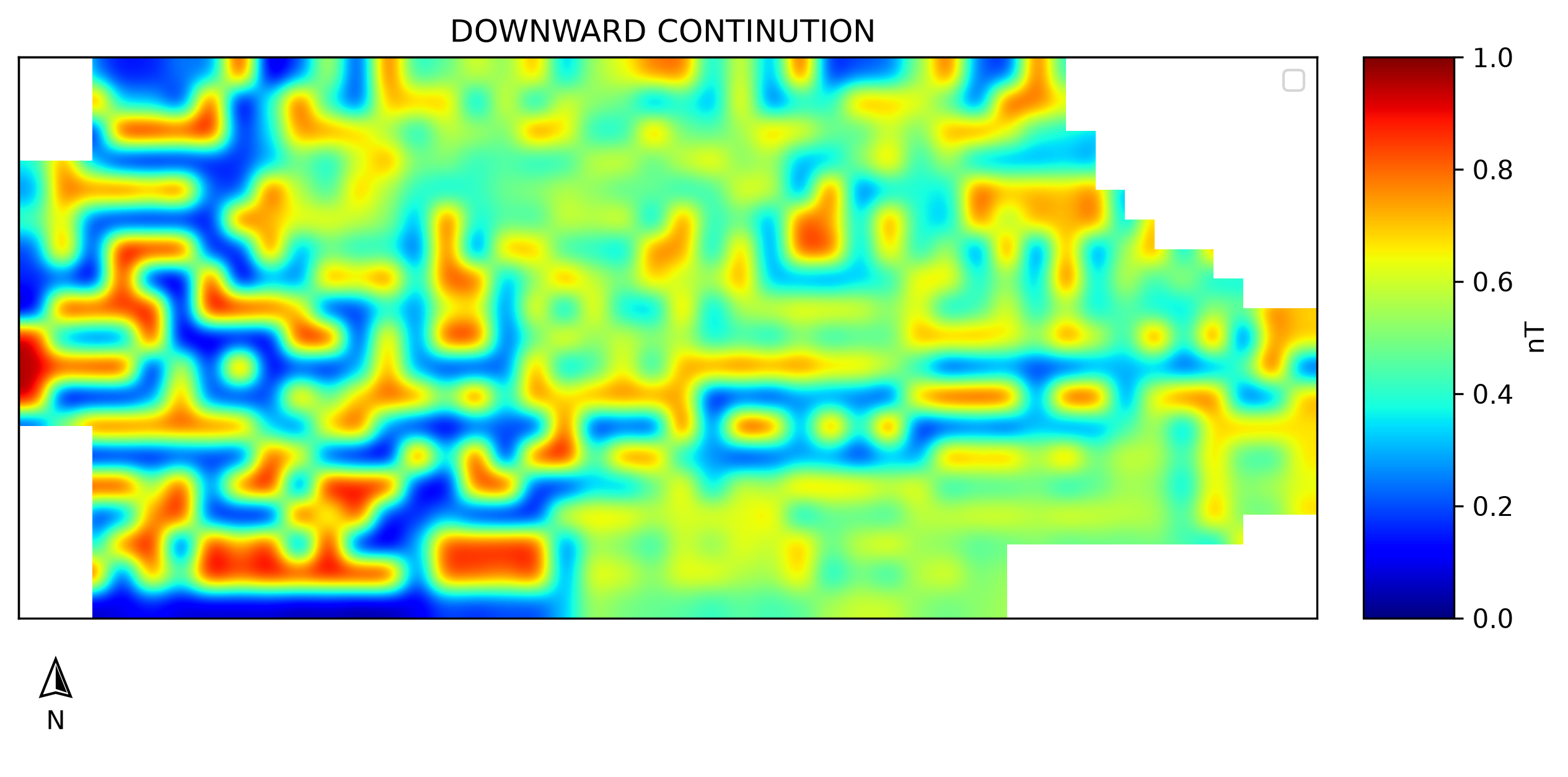
- Linear Subsurface Utilities: Continuous, aligned magnetic anomaly trends indicated the presence of buried metallic pipelines, conduits, or cables.
- Unknown Ferrous Objects: Distinct localized dipolar signatures highlighted undocumented subsurface metallic masses requiring verification prior to ground disturbance.
- Subsurface Anomaly Mapping: Generation of spatial magnetic anomaly maps delineating clear zones versus high-risk metallic clutter zones across the survey area.
Engineering Impact
- Enabled rapid, non-invasive detection of concealed metallic hazards without exploratory trenching.
- Reduced the risk of accidental strikes to undocumented metallic utilities and subsurface obstructions during excavation.
- Provided actionable spatial data to guide safe civil engineering, trenching, and foundation planning on campus.
- Established a baseline geophysical dataset to support future subsurface investigations and campus utility management.Conclusion The Overhauser magnetometer survey at IIT Tirupati successfully detected and mapped localized magnetic anomalies associated with buried metallic objects, pipelines, and subsurface debris. The results confirm that high-resolution magnetic surveying is an effective, non-destructive reconnaissance tool for subsurface hazard identification and safe site preparation
Let's Build the Future With Us
Whether you are a researcher, startup, industry partner, government organisation, academic institution, or student, IITTNiF provides opportunities to innovate, collaborate, develop technologies, and create national impact.