
Road Pavement Layer Assessment using GPR
Problem Statement
Road pavements deteriorate over time due to traffic loads, moisture ingress, and material fatigue. Traditional destructive testing for thickness and condition assessment is time-consuming, costly, and disruptive to traffic. A non-invasive method was required to evaluate layer thickness, structural integrity, and hidden defects in road pavement systems.
Overview
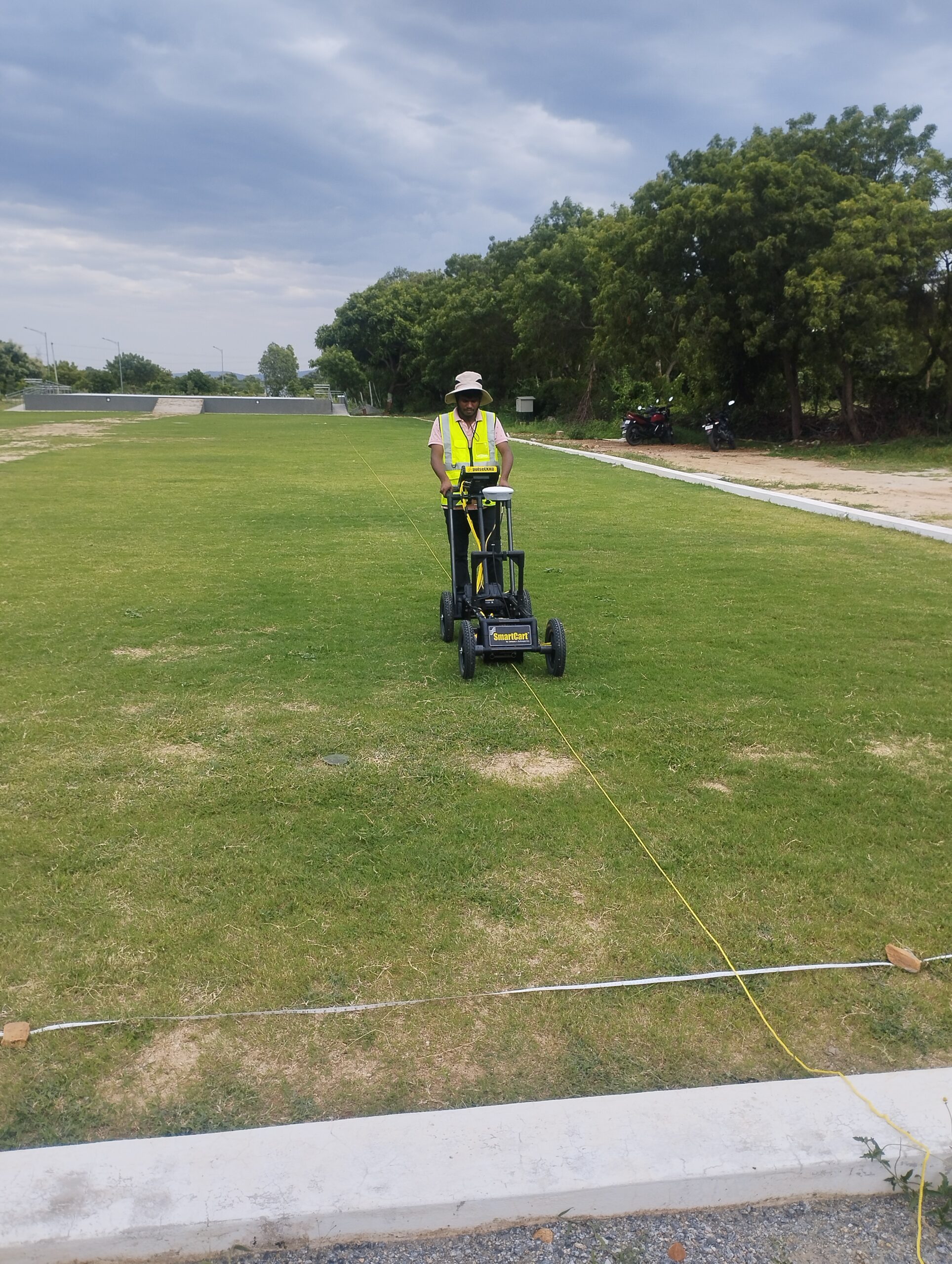
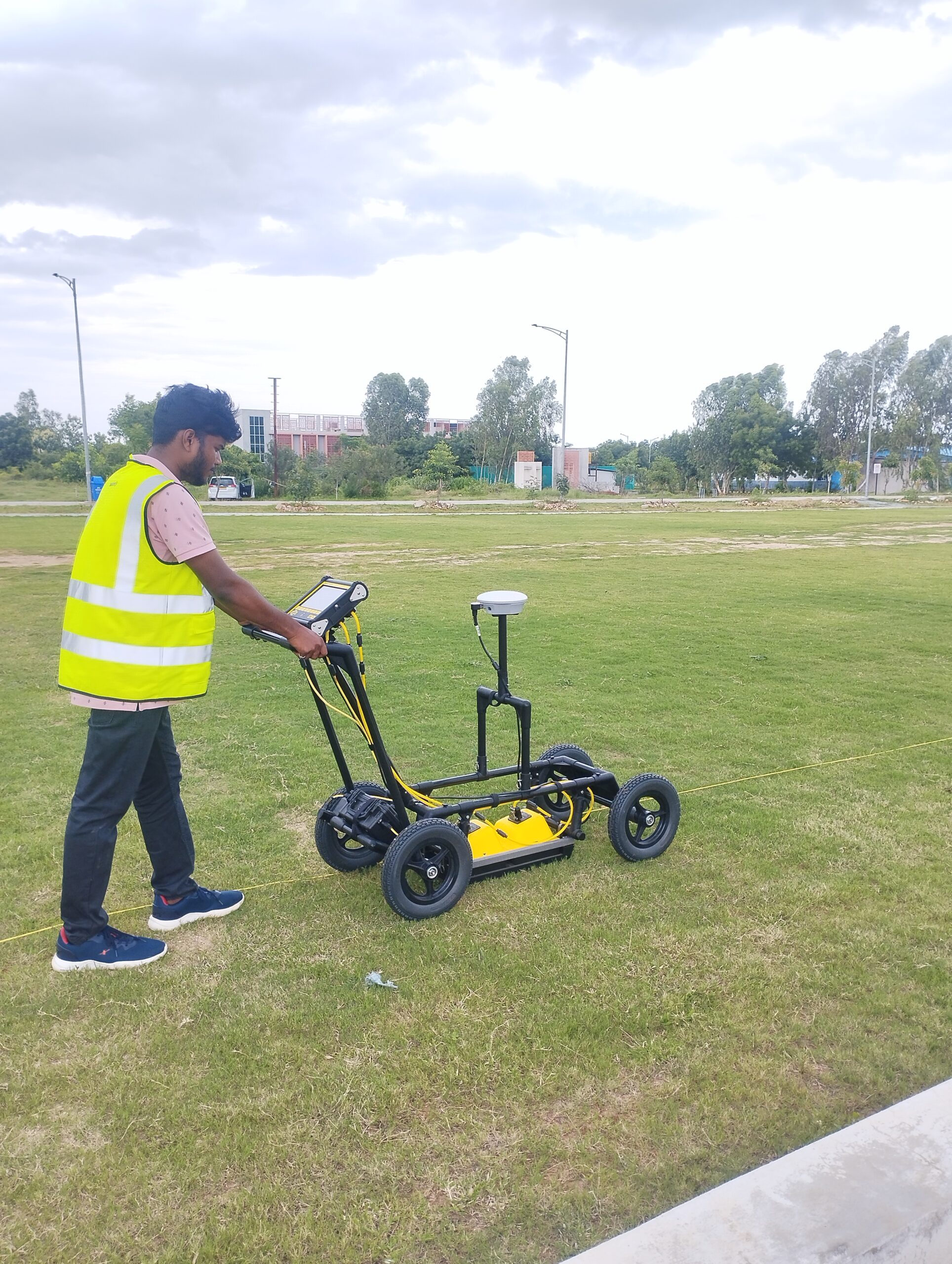
- A 500 MHz UWB GPR system (bandwidth: 250–750 MHz) was deployed for high-resolution scanning of road pavement sections. The objectives were to:
- Measure asphalt and base layer thicknesses.
- Detects debonding, moisture pockets, and voids within/below the pavement.
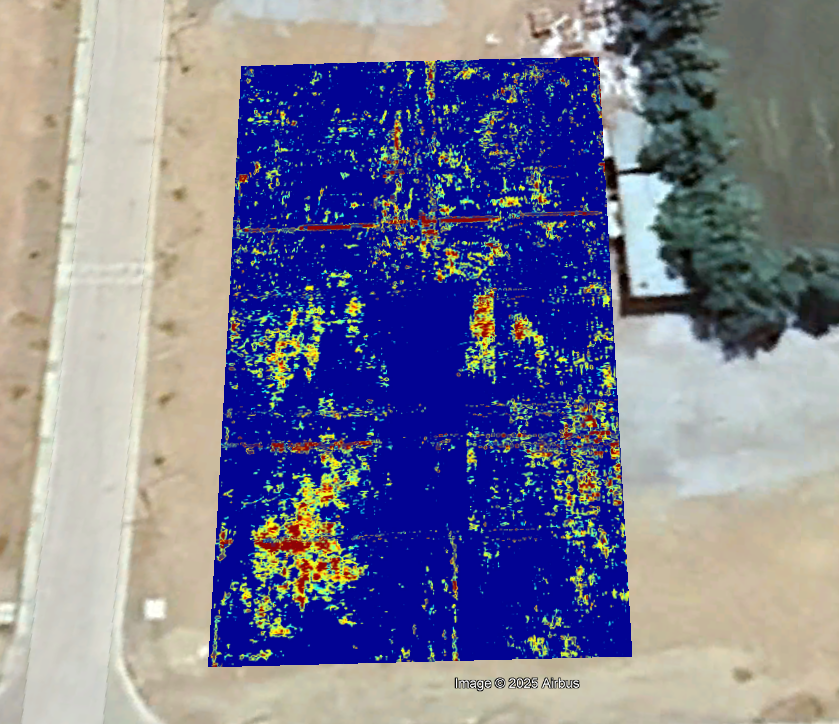
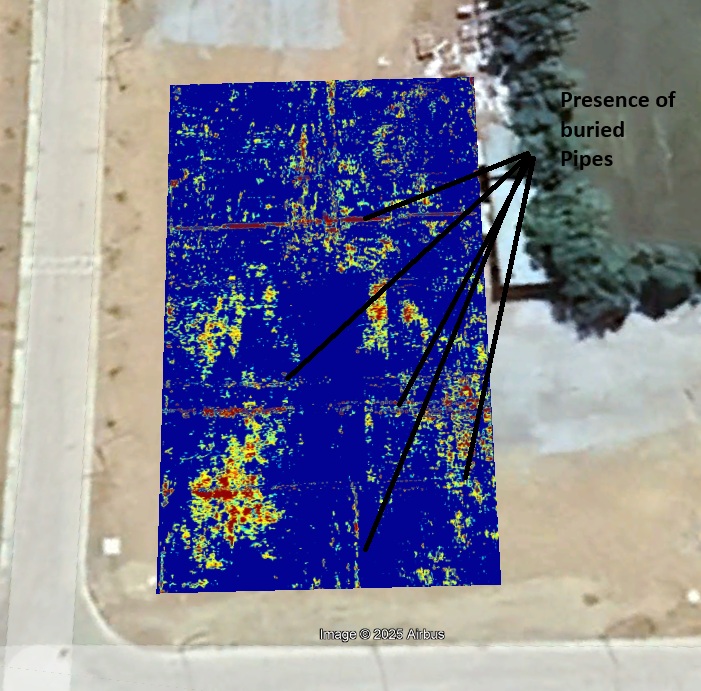
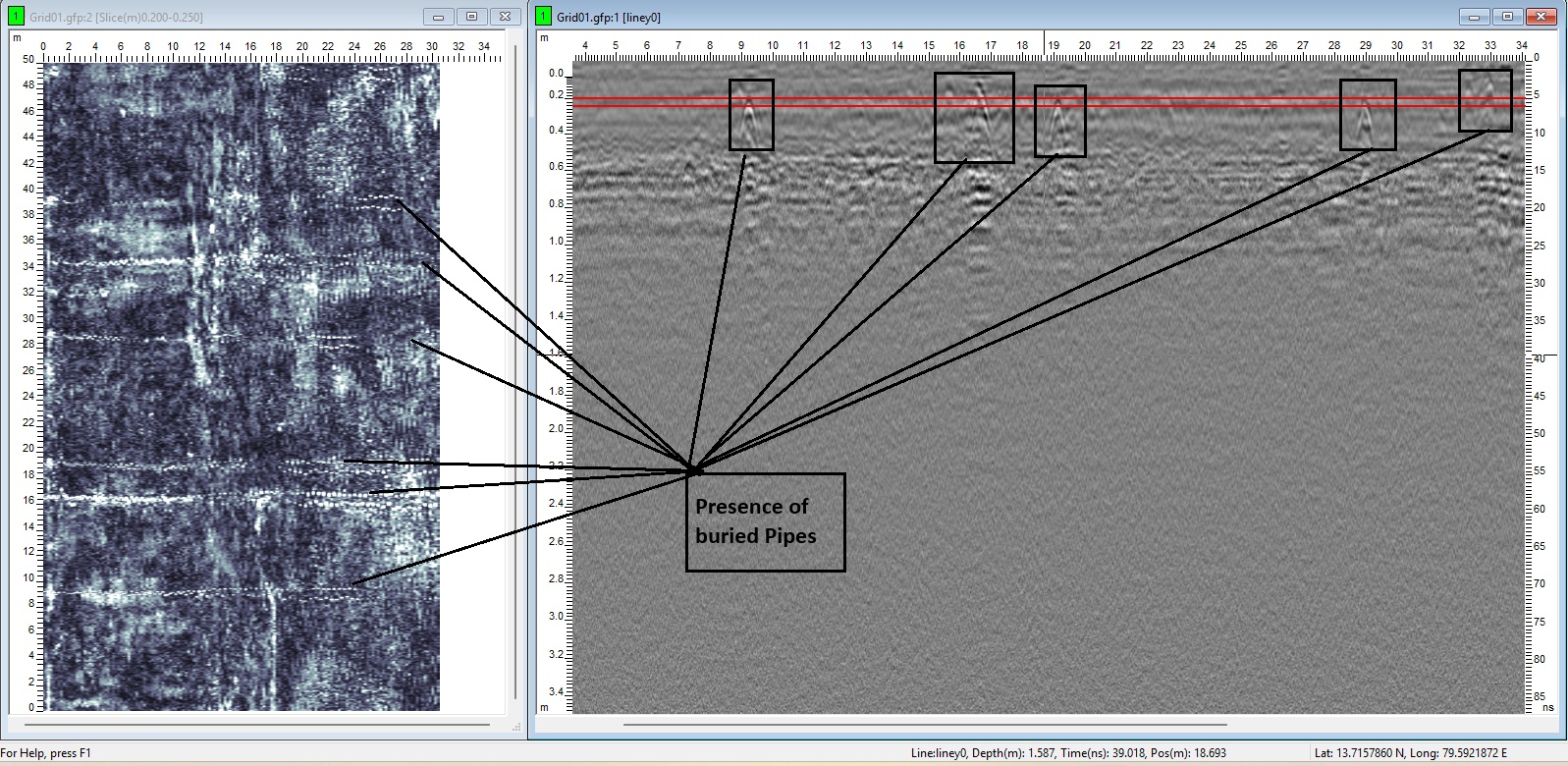
- Assess subgrade condition and identification of buried utilities under the roadway.
Methodology
- Survey Design: Continuous longitudinal profiles with transverse grids at 0.25–0.50 m spacing.
- Processing Workflow: Background removal, gain adjustment, migration, bandpass filtering, and depth–time conversion using dielectric calibration from cores/standards.
- Analysis Outputs: Pavement layer boundaries, anomaly mapping (voids, cracks, delaminations), and subgrade strength indicators
.
Key Findings
- Layer thickness mapping clearly resolved asphalt overlay over concrete base, with variations in thickness across sections.
- Moisture ingress zones identified as attenuated, low-amplitude reflections.
- Voids and debonding signatures detected between asphalt–concrete and concrete–subgrade interfaces.
- Subgrade heterogeneity mapped, indicating areas prone to differential settlement and rutting.
Engineering Impact
- Enabled accurate pavement thickness estimation without coring.
- Identified weak zones requiring preventive maintenance before major damage.
- Reduced maintenance costs by enabling targeted repairs.
- Enhanced asset management with a digital subsurface model of the road system.
Conclusion
GPR-based pavement evaluation offers a fast, non-destructive, and traffic-friendly solution to monitor road health. By identifying thickness variations, moisture damage, and voids, it supports data-driven maintenance planning and extends pavement service life.
Let's Build the Future With Us
Whether you are a researcher, startup, industry partner, government organisation, academic institution, or student, IITTNiF provides opportunities to innovate, collaborate, develop technologies, and create national impact.