
SVAN M2 – Autonomous Indoor Navigation and Person Following
Objective -
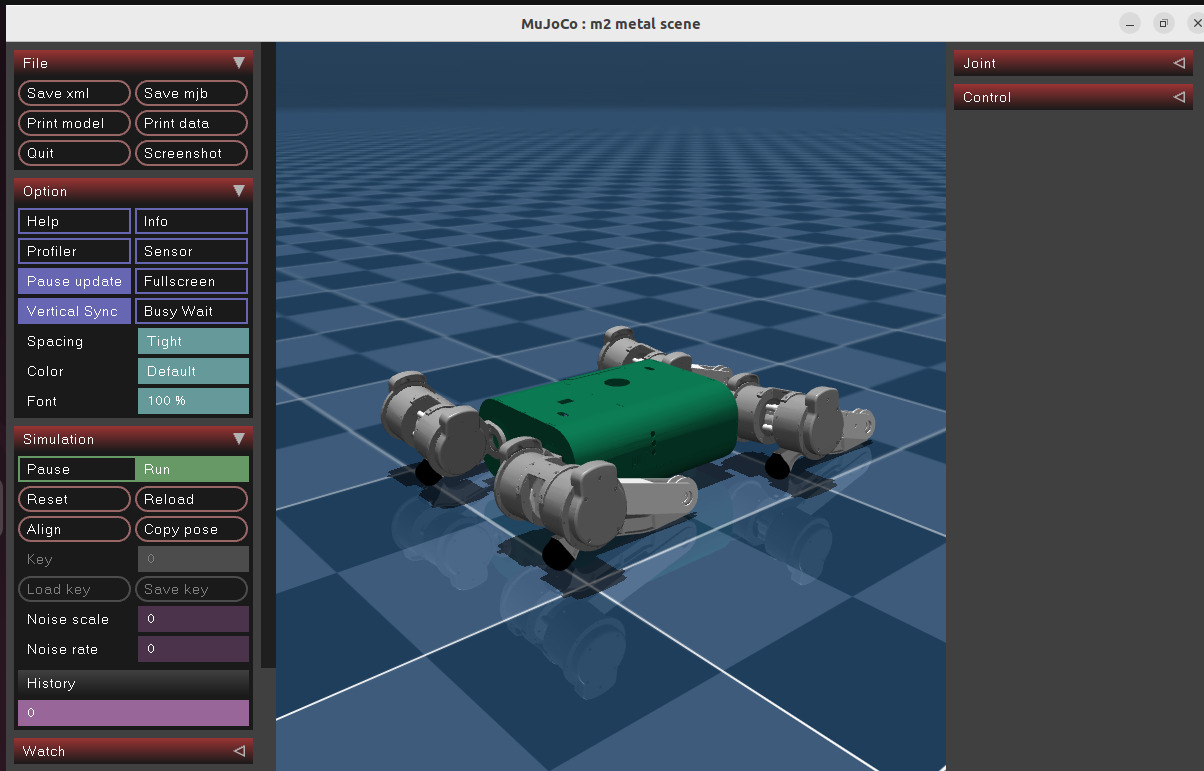
To develop an autonomous indoor navigation and human-following system for the SVAN M2 quadruped robot by integrating a deployed office map, waypoint-based path planning, real-time robot localisation, camera-based person detection and tracking, and intelligent motion control, enabling the robot to navigate independently to selected destinations and follow a designated person within a predefined indoor environment.
Detailed Description:
The SVAN M2 Autonomous Indoor Navigation Project focuses on developing an intelligent, map-based autonomous navigation and human-following system for a quadruped robotic platform, enabling it to operate within a predefined indoor office environment with minimal human intervention. The project involves the generation, deployment and integration of an occupancy-grid-based digital office map, representing the environment through free, occupied and unknown regions to establish a spatial reference for robot navigation. The deployed map is integrated into a web-based navigation interface, supporting map visualisation, coordinate-based destination selection, metric waypoint representation and waypoint-based navigation workflows. A unified All-in-One Navigator dashboard provides real-time camera streaming, robot connectivity monitoring, locomotion control, posture transitions, directional teleoperation and emergency-stop functionality, creating an integrated interface for robot operation and system monitoring. The perception subsystem incorporates camera-based person detection and visual target tracking, using bounding-box localisation and target identification to detect individuals, select a designated person and maintain target identity across successive video frames. These capabilities establish the foundation for autonomous person following through visual perception, target association, relative-position estimation and motion-control integration. The broader navigation architecture aims to combine robot localisation, coordinate-frame transformation, path planning, waypoint execution and feedback-based motion control, allowing the robot to estimate its position and orientation within the mapped environment, determine navigable routes and reach user-defined destinations autonomously. The system is designed around an embedded computing architecture involving the NVIDIA Jetson Orin Nano and Raspberry Pi 4, integrating onboard perception, robot communication and locomotion-control functions. Future development will focus on strengthening map-based localisation, integrating perception outputs with autonomous motion execution, and incorporating a depth camera for metric distance estimation, three-dimensional scene understanding, obstacle detection and collision-aware navigation. Ultimately, the project aims to establish a scalable autonomous robotic platform capable of indoor environment navigation, intelligent human tracking, destination-oriented movement and context-aware human–robot interaction.
Technology / Research Area:
Quadruped Robotics, Autonomous Navigation, Path Planning, Waypoint Navigation, Computer Vision, AI-Based Person Detection and Tracking, Obstacle Avoidance, Robot Motion Control, Embedded Systems, Jetson Orin Nano, Raspberry Pi 4, Python and OpenCV.